
What is a flea infestation in cats?
A flea infestation occurs when cat fleas (mostly Ctenocephalides felis) nest in your cat's fur. They feed on the animal's blood and reproduce rapidly. A single flea can lay up to fifty eggs per day, which land in your cat's environment. Without consistent treatment, the infestation can quickly spread to other pets and even to humans.
Typical causes for a flea infestation
- Contact with other infested animals such as outdoor cats, kittens, or shelter animals
- Spending time in areas with high flea populations like gardens, parks, or farms
- Transmission via textiles, carpets, or upholstered furniture
How do you recognize a flea infestation?
The symptoms can vary in severity. With a mild infestation, the cat scratches only occasionally. A severe infestation can lead to massive skin problems. Typical signs:
- Frequent scratching or licking, for example, if the cat continues to scratch after flea treatment
- Small black dots in the fur (flea dirt). Whether the small dots are really flea dirt or just dirt can be tested quite simply: place the small black dots on a white paper towel, moisten them, and if it turns red, then it is the blood that the fleas have excreted.
- Redness or bald spots
- Restlessness and nervousness
- Visible fleas in the fur or on the skin
- Skin inflammation or allergic reactions (flea saliva allergy)
How does flea treatment for cats work?
The treatment generally covers two areas:
- Direct treatment of the cat with spot-on preparations and tablets from the veterinarian (important: no over-the-counter remedies, which often do not work and can carry further risks. Only preparations approved for cats and the appropriate weight class may be used on cats, otherwise poisoning can occur!)
- Environmental treatment in case of flea infestation with thorough cleaning of sleeping places, textiles, carpets, and if necessary, environmental sprays
Proper handling of the products is also important. A common question is whether you can bathe a cat after flea treatment. Basically, cats should not be bathed, as cats are very clean animals. If you use a spot-on preparation, you should not bathe your cat or let it get wet for at least 48 hours. Water and shampoo can rinse the active ingredients off the skin and severely reduce the effectiveness of the treatment.
Many owners ask about the duration of flea treatment for a cat. While the direct treatment of the animal is done quickly, the complete elimination of fleas from the entire environment can take several weeks to months. This is due to the life cycle of the parasites, as eggs, larvae, and pupae are very resilient and hatch only gradually. Patience and consistency are crucial here.
The question of how often flea treatment is necessary for a cat is also central. In the case of an acute infestation, immediate treatment of all animals living in the household is required. For prevention, especially with outdoor cats, regular prophylactic application according to the vet's instructions is recommended, for example monthly with a spot-on, to prevent re-infestation from the outset.
Typical procedure at the vet:
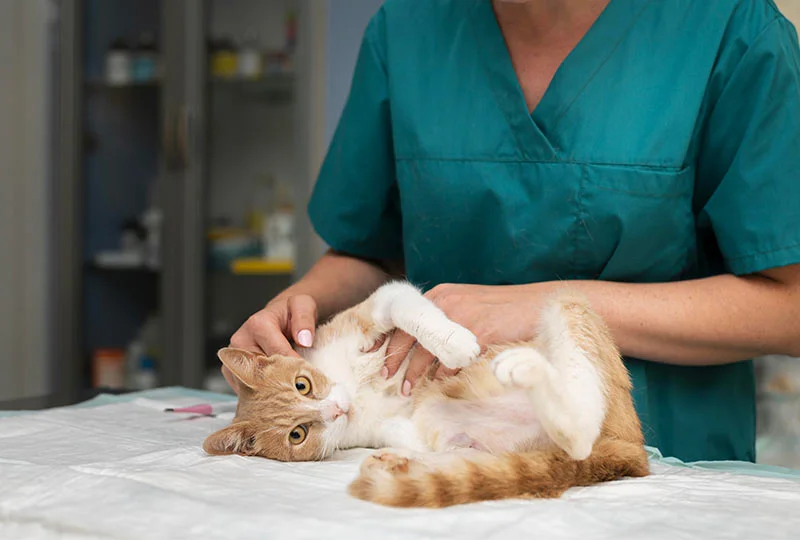
- General examination to confirm the flea infestation
- Selection of a suitable flea product, for example spot-on, tablet, or spray
- Advice on environmental treatment
- Treatment of any skin inflammation or allergies
- Follow-up appointment to check effectiveness

Focus on the cuddles, we'll focus on the costs.
Flea treatment for the cat: Costs at the vet in Germany
The costs can vary depending on the infestation, type of treatment, number of animals in the household, and GOT billing rate.
Example costs for an uncomplicated case
A cat has a mild flea infestation. The veterinarian examines it, prescribes a spot-on preparation, and gives tips on cleaning the environment. In this case, the total costs are around €40 to €80.
Example costs for a complicated course
A cat suffers from severe flea infestation with skin inflammation. In addition to flea treatment, medication, skin therapy, and several follow-up appointments are necessary. Here, the total costs can easily range from €120 to over €250.
Further cost factors
- Multiple cats in the household, as all animals must be treated
- Re-infestation due to incompletely treated environment
- Emergency service surcharges for weekend or holiday treatment
- Special preparations for kittens, as flea treatment for kittens requires special agents
Note on cost coverage by cat insurance
With cat health insurance like Dalma's, many of these costs can be covered, especially if the flea treatment is medically necessary, for example due to allergic skin reactions, open wounds from scratching, or secondary illnesses like tapeworm infestation.
Purely prophylactic treatment without an acute medical cause (e.g., precautionary spot-on in spring) is reimbursed via the prevention budget!
Depending on the tariff, Dalma covers among other things:
- Veterinary examinations and consultation
- Medications such as spot-on, tablets, or injections
- Treatment of skin inflammation, allergies, or secondary infections
- Follow-up appointments and laboratory diagnostics (e.g., skin scrapings)
- Surcharges for night and weekend treatments
- Costs in connection with follow-up treatments up to 30 days after surgery or acute illness
Important: Cost coverage depends on the chosen tariff and assumes that the waiting period after contract conclusion has been met.
Realistic cost example: Flea infestation with allergy
Sven from Cologne reports: "My cat Minka suddenly had severe itching and bald spots on her back. The vet diagnosed a massive flea infestation, plus a flea saliva allergy. After spot-on, cortisone, antibiotics, and two follow-up appointments, the costs were around €180. Fortunately, my Dalma cat health insurance covered eighty percent. So I could focus fully on Minka's recovery."
FAQ: Frequently Asked Questions about Flea Treatment for Cats
Does cat insurance cover flea treatment?
Yes, if the flea treatment is medically necessary, for example in cases of severe infestation, skin inflammation, or a flea saliva allergy, a cat health insurance like Dalma can reimburse the costs. Purely precautionary measures are covered by the prevention budget.
Does Dalma also pay for flea products from the pharmacy or the vet?
Dalma covers reimbursable flea products if they have been prescribed by the veterinarian or dispensed as part of a treatment. Over-the-counter preparations bought without a veterinary recommendation are generally not reimbursable.
What happens if my cat still has fleas after the flea treatment?
This happens frequently and does not mean that the treatment was ineffective. Eggs and larvae in the environment hatch with a time delay. In this case, further treatments or follow-up appointments are necessary, which can also be covered by insurance if medically necessary.
Is flea treatment also sensible for indoor cats?
Yes. Indoor cats can also get fleas, for example via clothing, other animals, or visitors. In the case of a proven infestation, veterinary treatment is necessary regardless of whether the cat is an outdoor cat.
Is there a waiting period at Dalma for flea treatment?
Yes. Cost coverage is only possible after the waiting period has expired. If the flea infestation occurs before the start of insurance or during the waiting period, it is considered a pre-existing condition and is not reimbursable.
Focus on the cuddles, we'll focus on the costs.
Further Sources
- Scale of Fees for Veterinarians (GOT): Legal basis for veterinary costs in Germany, including billing rates for operations and emergency services: https://www.gesetze-im-internet.de/got_2022/
- Federal Chamber of Veterinarians - Information on GOT and emergency service fees: Explains understandably why vet costs vary and when higher fee rates may be charged: https://www.bundestieraerztekammer.de/tieraerzte/beruf/got/


