
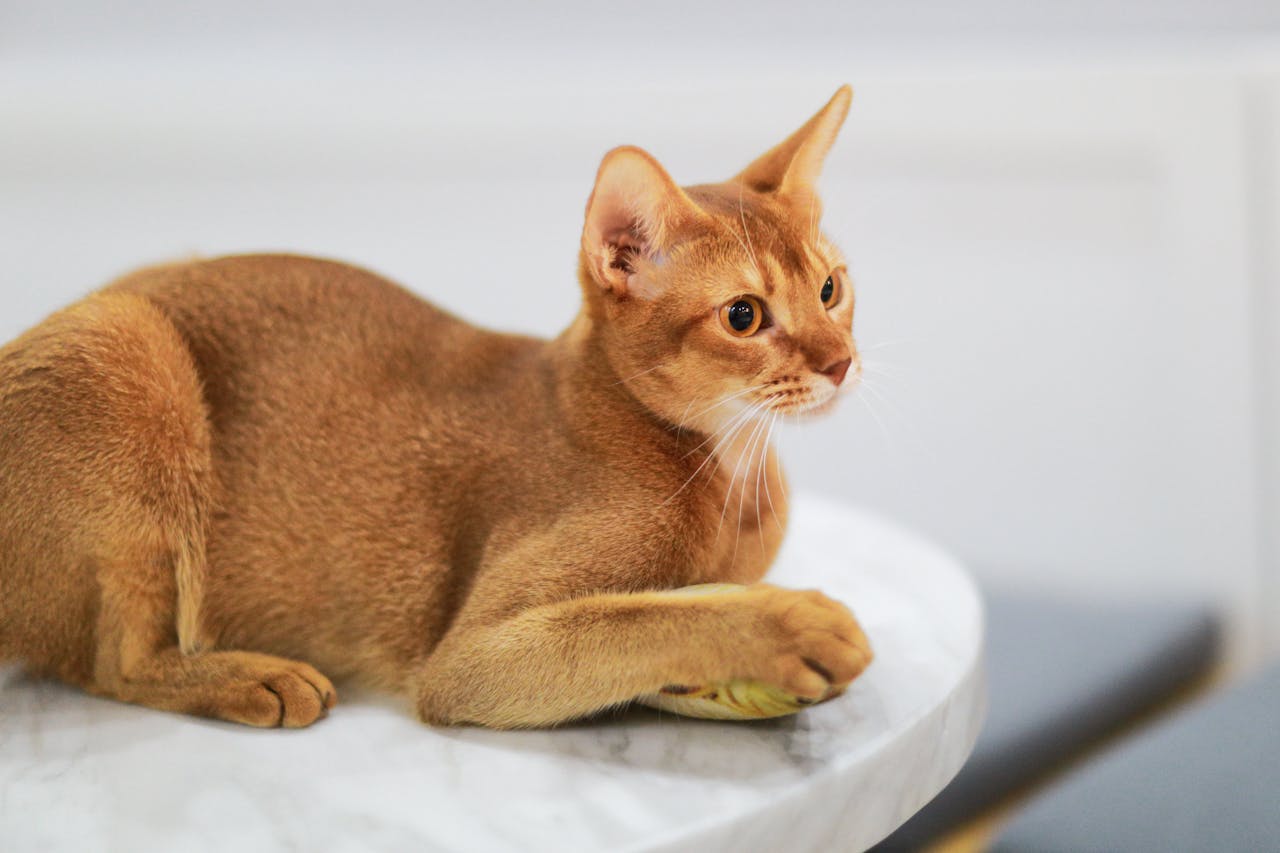
Mini Puma with Three Breed-Typical Risks: What Abyssinians Face at the Vet
The Abyssinian is generally considered robust and long-lived. But three breed-typical inherited diseases make purchasing a kitten from a reputable breeder with genetic test certificate particularly important. Those who choose carefully will have a very healthy cat – and can focus insurance protection on everything else.
The three breed-typical inherited diseases
1. Pyruvate Kinase Deficiency (PK Deficiency)
Inherited form of anaemia. Red blood cells lack the pyruvate kinase enzyme, dramatically shortening their lifespan. Symptoms: lethargy, pale gums, jaundice, bloated abdomen. There are two phases: an intermittent phase with episodes and a "haemolytic crisis", often triggered by stress. There is no cure; blood transfusions can bridge crises. Note: Excluded as inherited condition.
2. Progressive Retinal Atrophy (PRA)
Genetically caused, recessively inherited degeneration of the retinal rod cells, leading to blindness. In Abyssinians often recognisable at a young age. Note: Excluded as inherited eye disease.
3. Renal Amyloidosis
Inherited metabolic disorder with amyloid deposits in the kidneys, leading to chronic kidney failure and usually death. Primarily prevalent in Abyssinian and Somali cats. Reliable diagnosis is usually only possible post mortem. Note: Excluded as inherited kidney disease.
What this means: When buying a kitten, insist on a genetic test certificate. Laboklin has been offering a combined genetic test for PK deficiency and PRA since 2007. Renal amyloidosis is genetically harder to detect – careful breeding by the breeder counts here.
Other common conditions
- Patellar luxation: occurs in Abyssinians, four severity grades. Acquired patellar luxation covered after 18 months waiting period; congenital form excluded.
- Feline Neonatal Isoerythrolysis (FNI / "Fading Kitten Syndrome"): blood group incompatibility between mother cat (blood group B) and kittens (blood group A). Acutely fatal, only avoidable through thoughtful pairing. Concerns the breeder, not later owners.
- Periodontitis and dental conditions: Abyssinians tend to develop periodontal disease. Covered after 12 months (FORL, gingivitis, periodontitis).
- Injuries from high activity level: Abyssinians climb and jump a lot. Covered after 2 days waiting period.
- Gastrointestinal topics: active cats with high metabolism may tolerate food changes less well. Covered after 30 days.
- General infections: cat flu, FIP, leukosis – covered, provided vaccination protection is in place.
The cost ranges listed above are based on the German Veterinary Fee Schedule (GOT 2022) and typical market prices in German veterinary practices. Actual costs may vary depending on the practice, the scope of treatment and the chosen GOT rate (1x to 4x).
Kitten Purchase Checklist: What to Look for in Abyssinian Breeders
Since breed-typical inherited diseases are excluded from insurance, the kitten purchase is a key decision for your Abyssinian's lifelong health:
- PK deficiency genetic test certificate: Both parents must be "Free" or at most one "Carrier". Carrier × carrier is forbidden.
- PRA genetic test certificate: Both parents "Free" or at most one "Carrier". Available at Laboklin in a combined test.
- Breeding line documentation: Are there cases of Renal Amyloidosis in the line? Reputable breeders know and disclose.
- Membership in cat breeding association: e.g. WCF, FIFe, TICA – with documented pedigrees.
- Vaccination passport and health check: incl. vet certificate at sale.
- Cat grows up in family environment: socialisation from week 1, handover at earliest 12 weeks.
- Written purchase contract: incl. warranty for inherited disease manifestation in early years.
Prices: An Abyssinian with pedigree costs ca. €700–1,500. Privately offered animals without papers are often cheaper but carry the risk of missing genetic tests and undocumented lines.

Focus on the cuddles, we'll focus on the costs.
Surgery Insurance or Full Cover: Which Plan Suits the Abyssinian?
1. Surgery insurance for Abyssinians
Covers costs for surgical procedures – e.g. patellar luxation, injuries or tumour surgery. Dalma includes:
- Surgical procedures for illness or accident
- Pre-op diagnostics up to 30 days before surgery
- Post-op clinic stays up to 30 days after surgery
- Medication, bandages and aftercare
- Physiotherapy and alternative treatments up to 30 days post-op
- Dental surgery after waiting period
- Emergency accommodation up to €250 per year
2. Cat health insurance (full cover) for Abyssinians
Covers diagnostics, treatments, medication and preventive care. 80–100% reimbursement, annual limit from €1500 to unlimited. Includes:
- Diagnostics and medical examinations
- Prescribed medication and treatments
- Unlimited physiotherapy
- Alternative treatments such as homeopathy or acupuncture
- Behavioural therapy up to 5 hours per year
- Telemedicine via FirstVet
- Preventive care budget for vaccinations, dental care, deworming (from €1,500 annual limit)
Assessment: For the Abyssinian, full cover is particularly worthwhile. Diagnostics for non-specific symptoms (e.g. fatigue or pale gums) – even when not caused by excluded inherited diseases – often arise on an outpatient basis. Periodontitis prevention and treatment also speak for full cover.
What Does Abyssinian Insurance Cost at Dalma?
- Cat health insurance: from approx. €16 per month
- Surgery insurance: from approx. €8 per month
As of April 2026. Dalma offers 15% discount when insuring multiple pets. Neutering/spaying claimed via the preventive care budget.
From age 10, the reimbursement rate for illnesses decreases by 5% annually. Accident reimbursement remains unchanged.
Waiting Periods for the Abyssinian
- 2 days for accidents
- 14 days for surgeries
- 30 days for medical treatments
- 12 months for FORL, gingivitis and periodontitis
- 12 months for HD/ED
- 18 months for patellar luxation
Pre-existing conditions are excluded. Preventive care budget is available from day 1. Since Abyssinians tend to develop periodontal disease, the 12-month waiting period for dental conditions is an important milestone for early-insured cats.
What Is Not Covered for the Abyssinian
For the Abyssinian, breed-typical exclusions for the three inherited diseases as well as general feline exclusions apply:
- PK deficiency (Pyruvate Kinase deficiency) – breed-typical inherited disease
- PRA (Progressive Retinal Atrophy) – breed-typical inherited eye disease
- Renal amyloidosis – inherited kidney disease
- Feline Neonatal Isoerythrolysis – concerns the breeder (blood group pairing)
- Congenital patellar luxation
- HCM (Hypertrophic Cardiomyopathy) – general exclusion
- PKD (Polycystic Kidney Disease)
- Brachycephalic syndrome (not relevant for Abyssinians, general exclusion)
- Congenital eye diseases
- Persistent deciduous teeth
- Epilepsy
- Osteoarthritis
- Diseases preventable by vaccination (cat flu, feline parvovirus, leukosis)
Acquired conditions like non-inherited kidney insufficiency in old age, acquired eye conditions (e.g. senile cataract), acquired musculoskeletal and gastrointestinal conditions are covered after the waiting period.
Focus on the cuddles, we'll focus on the costs.
Claims Process at Dalma
100% digital. Upload invoice via app, 8-day deadline. Reimbursement target 48 hours (contractually up to 5 working days). Up to 4x GOT rate including emergency surcharges. Free choice of vet worldwide. Telemedicine via FirstVet free and unlimited. Neutering and spaying can be claimed via preventive care budget.
Abyssinian Insurance: Who Benefits Most
Sign up with genetic test certificate: If your Abyssinian comes from a reputable breeder with documented PK and PRA tests, the probability of a long, healthy cat life is high. Insurance then protects against acquired conditions and accidents.
Full cover for active life phase: Abyssinians are very active cats with high injury and diagnostic needs. Full cover with unlimited physiotherapy is a worthwhile investment.
Less value: If your Abyssinian already has a PK, PRA or amyloidosis diagnosis. These are considered pre-existing conditions. Other diseases remain insurable.
Early insurance pays off: With the high life expectancy (12–16 years), early insurance is particularly worthwhile – also regarding senior topics like kidney insufficiency and dental conditions.
Frequently Asked Questions About Abyssinian Insurance
Is health insurance worthwhile for an Abyssinian?
Yes. Even if Abyssinians with documented genetic tests are very robust, they are very active cats with increased injury and diagnostic needs. They also tend to develop periodontitis – which is covered after 12 months of waiting period.
Are PK deficiency and PRA covered for the Abyssinian?
No. Pyruvate kinase deficiency (PK deficiency) and Progressive Retinal Atrophy (PRA) are excluded as breed-typical inherited diseases. A genetic test when buying a kitten provides certainty – Laboklin has offered a combined test since 2007.
Is renal amyloidosis covered?
No. Renal amyloidosis is an inherited metabolic disorder and excluded as breed-typical for the Abyssinian. Acquired kidney insufficiency in senior age (without amyloidosis background) is covered after 30 days.
Where can I get a genetic test for my Abyssinian?
Laboklin offers a combined PK/PRA genetic test for Abyssinian and Somali cats. The test can be performed with cheek swab or EDTA blood, results after three days ("Free", "Carrier" or "Affected").
Are dental treatments covered?
Yes. FORL, gingivitis and periodontitis are covered after 12 months of waiting period. Since Abyssinians tend to develop periodontal disease, this protection is particularly valuable.
What is "Fading Kitten Syndrome"?
Feline Neonatal Isoerythrolysis (FNI) is a blood group incompatibility between mother cat (blood group B) and kittens with blood group A. It exclusively concerns breeding – as a later owner, you can avoid the risk by choosing a reputable breeder.
How old does an Abyssinian get?
Abyssinians have a life expectancy of 12 to 16 years; some get significantly older. They often remain active and playful into old age – almost like an "ever young" cat.
Are Abyssinians indoor or outdoor cats?
Both possible. Abyssinians are very active and need lots of activity. Pure indoor keeping only makes sense with sufficient climbing options and play time. Leash walks are also possible.
Is there a deductible at Dalma?
No. Dalma has no deductible. Depending on the plan, 80–100% of eligible costs are reimbursed.
Does my Abyssinian stay insured after an expensive treatment?
Yes. Dalma waives the right to cancel after a claim.
Sources and Further Information
The veterinary costs mentioned in this article are reference values. Actual costs are governed by the German Veterinary Fee Schedule (GOT) and may vary depending on the practice, the scope of treatment and the chosen GOT rate (1x to 4x).
Official sources on the German Veterinary Fee Schedule (GOT 2022):
- Full text of the GOT 2022: https://www.gesetze-im-internet.de/got_2022/
- German Veterinary Association (BTK): bundestieraerztekammer.de – official body with information on GOT, emergency service and billing
- German Federal Ministry of Agriculture (BMLEH): bmleh.de/DE/themen/tiere/got.html – background on the 2022 GOT amendment
Sources on Abyssinian inherited diseases and genetic tests:
- Laboklin: laboklin.de – Combined PK/PRA genetic test for Abyssinian and Somali, available since 2007
- TICA Standard: breed recognition and breeding lines
- Veterinary literature: on renal amyloidosis in Abyssinian and Somali
Sources and Further Information
The veterinary costs mentioned in this article are reference values. Actual costs are governed by the German Veterinary Fee Schedule (GOT) and may vary depending on the practice, the scope of treatment and the chosen GOT rate (1x to 4x).
Official sources on the German Veterinary Fee Schedule (GOT 2022):
- Full text of the GOT 2022: https://www.gesetze-im-internet.de/got_2022/
- German Veterinary Association (BTK): bundestieraerztekammer.de – official body with information on GOT, emergency service and billing
- German Federal Ministry of Agriculture (BMLEH): bmleh.de/DE/themen/tiere/got.html – background on the 2022 GOT amendment
Sources on Abyssinian inherited diseases and genetic tests:
- Laboklin: laboklin.de – Combined PK/PRA genetic test for Abyssinian and Somali, available since 2007
- TICA Standard: breed recognition and breeding lines
- Veterinary literature: on renal amyloidosis in Abyssinian and Somali


