
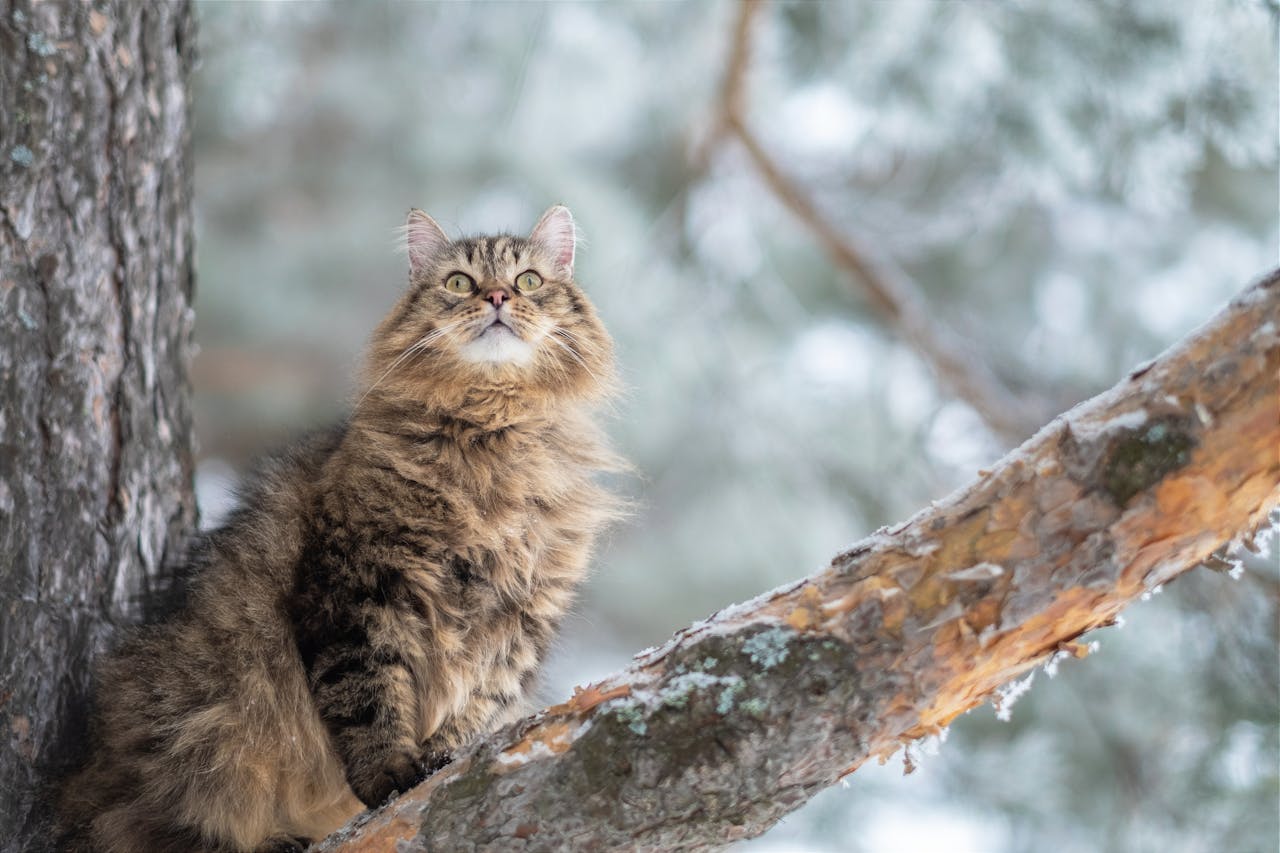
Natural Cat from Siberia: What Siberians Really Face at the Vet
The Siberian Cat is one of the few modern pedigree cats whose breeding remains closely linked to the natural form. Its controlled breeding only began in the late 1980s, so the gene pool is still very broad. This is its great health advantage – but here too there are individual documented inherited diseases that owners should know.
The two documented breed-specific inherited diseases
1. Hypertrophic Cardiomyopathy (HCM)
The most common heart disease in cats, also documented in Siberians. The heart muscle thickens, gradually impairing heart function. Symptoms like shortness of breath or sudden paralysis often appear late. Diagnostics via cardiac ultrasound (echocardiography) approx. €100–250. Note: Excluded as inherited condition.
2. Polycystic Kidney Disease (PKD)
Inherited formation of cysts in the kidneys, leading to kidney failure long-term. Diagnosis via ultrasound reliably possible from the 10th month of life. Note: Excluded as inherited condition.
What this means: When buying a kitten, insist on examination certificates of the parent animals – particularly cardiac ultrasound (HCM) and kidney ultrasound or genetic test (PKD). Since the breed is young and the gene pool broad, risks at reputable breeders are statistically lower than with heavily line-bred breeds.
Natural-breed-related topics
- Eye problems: due to large eyes, Siberians may more easily develop tear duct blockages or eye inflammation. Acquired eye conditions covered after 30 days.
- Hairball problems: the triple-layered, dense fur requires intensive self-grooming. Often vomiting and digestive issues. Covered after 30 days, surgery after 14 days.
- Injuries from activity: Siberians are robust climbers and jumpers. The water-repellent fur makes them weatherproof outdoor cats – if the option exists. Covered after 2 days waiting period.
- Gastrointestinal topics: active cats with high metabolism. Covered after 30 days.
- Allergies in the Siberian itself: some Siberians react to certain foods with digestive or skin problems. Diagnostics and therapy covered after 30 days.
- General infections: cat flu, FIP, leukosis – covered, provided vaccination protection is in place.
The cost ranges listed above are based on the German Veterinary Fee Schedule (GOT 2022) and typical market prices in German veterinary practices. Actual costs may vary depending on the practice, the scope of treatment and the chosen GOT rate (1x to 4x). Sources are listed at the end of this page.
The Allergy-Friendly Myth: What Really Lies Behind Fel d 1
Siberian cats are often advertised as "hypoallergenic". This blanket statement is medically not entirely correct. The reality is more nuanced:
What the Fel d 1 protein means
The Fel d 1 protein is the main trigger of cat allergies in humans. It is found in saliva, sebaceous glands and on the cat's skin. When grooming, the cat distributes this protein over the entire fur – the hair itself is not the allergen.
Why Siberians are considered more allergy-friendly
Studies and breeder observations show that many Siberians produce less Fel d 1 than the average of other cats. However, this is not a guarantee. The Fel d 1 amount varies from animal to animal and is influenced by:
- Sex: un-neutered males generally produce more Fel d 1
- Neutering: can significantly reduce production in males
- Age: kittens produce less Fel d 1 than adult cats
- Coat colour: silver and smoke variants often show higher levels
Recommendation: Anyone with a cat allergy should perform a multi-stage compatibility test at the breeder before purchasing a Siberian – ideally over several hours and with the specific cat that will move in. Allergy treatments for human owners are of course not covered by insurance.

Focus on the cuddles, we'll focus on the costs.
Surgery Insurance or Full Cover: Which Plan Suits the Siberian Cat?
1. Surgery insurance for Siberian Cats
Covers costs for surgical procedures – e.g. intestinal obstruction from hairballs, injuries or tumour surgery. Dalma includes:
- Surgical procedures for illness or accident
- Pre-op diagnostics up to 30 days before surgery
- Post-op clinic stays up to 30 days after surgery
- Medication, bandages and aftercare
- Physiotherapy and alternative treatments up to 30 days post-op
- Dental surgery after waiting period
- Emergency accommodation up to €250 per year
2. Cat health insurance (full cover) for Siberian Cats
Covers diagnostics, treatments, medication and preventive care. 80–100% reimbursement, annual limit from €1500 to unlimited. Includes:
- Diagnostics and medical examinations
- Prescribed medication and treatments
- Unlimited physiotherapy
- Alternative treatments such as homeopathy or acupuncture
- Behavioural therapy up to 5 hours per year
- Telemedicine via FirstVet
- Preventive care budget for vaccinations, dental care, deworming (from €1,500 annual limit)
Assessment: For the Siberian, full cover is particularly worthwhile – even though the breed is robust. Diagnostics for unclear symptoms, senior topics like age-related kidney insufficiency, dental conditions and hairball-related digestive issues often arise on an outpatient basis. With the high life expectancy (up to 20 years), broad cover pays off particularly.
What Does Siberian Cat Insurance Cost at Dalma?
- Cat health insurance: from approx. €16 per month
- Surgery insurance: from approx. €8 per month
As of April 2026. Dalma offers 15% discount when insuring multiple pets. Neutering/spaying claimed via the preventive care budget.
From age 10, the reimbursement rate for illnesses decreases by 5% annually. Accident reimbursement remains unchanged.
Waiting Periods for the Siberian Cat
- 2 days for accidents
- 14 days for surgeries
- 30 days for medical treatments
- 12 months for FORL, gingivitis and periodontitis
- 12 months for HD/ED
- 18 months for patellar luxation
Pre-existing conditions are excluded. Preventive care budget is available from day 1.
What Is Not Covered for the Siberian Cat
For the Siberian Cat, two breed-typical inherited disease exclusions apply alongside general feline exclusions:
- HCM (Hypertrophic Cardiomyopathy) – also documented in Siberians
- PKD (Polycystic Kidney Disease) – as inherited condition
- Brachycephalic syndrome (not relevant for Siberians, general exclusion)
- PRA and congenital eye diseases
- Congenital patellar luxation
- Persistent deciduous teeth
- Epilepsy
- Osteoarthritis
- Diseases preventable by vaccination (cat flu, feline parvovirus, leukosis)
Acquired conditions (e.g. non-inherited kidney insufficiency in senior age, acquired heart conditions without genetic component, acquired eye conditions) are covered after the waiting period. Allergies (e.g. to food or environmental allergens) are also covered.
Focus on the cuddles, we'll focus on the costs.
Claims Process at Dalma
100% digital. Upload invoice via app, 8-day deadline. Reimbursement target 48 hours (contractually up to 5 working days). Up to 4x GOT rate including emergency surcharges. Free choice of vet worldwide. Telemedicine via FirstVet free and unlimited. Neutering and spaying can be claimed via preventive care budget.
Siberian Cat Insurance: Who Benefits Most
Sign up with examination certificate: If your Siberian Cat comes from a reputable breeder with documented heart and kidney examinations, the biggest risks are minimised in advance.
Early insurance pays off: With the exceptionally high life expectancy (up to 20 years), early protection is particularly worthwhile – also regarding senior topics like non-inherited kidney insufficiency and dental conditions.
Full cover for late developers: Siberians are fully grown only at about age 5 – during this long growth phase, musculoskeletal and digestive topics arise that full cover handles.
Less value: If your Siberian already has an HCM or PKD diagnosis. These are considered pre-existing conditions. Other diseases remain insurable.
Frequently Asked Questions About Siberian Cat Insurance
Is health insurance worthwhile for a Siberian Cat?
Yes. Even though the Siberian is considered a very robust breed, injuries, gastrointestinal topics, eye problems, senior kidney insufficiency and dental conditions can occur at any time. With the high life expectancy (12–20 years), vet costs add up significantly over the lifetime.
Are HCM and PKD covered for the Siberian Cat?
No. HCM (Hypertrophic Cardiomyopathy) and PKD (Polycystic Kidney Disease) are excluded as congenital/inherited conditions. A veterinary pre-examination at puppy purchase is recommended.
Are Siberian Cats really suitable for allergy sufferers?
Siberians produce on average less Fel d 1 than other cats but are not 100% hypoallergenic. A multi-stage compatibility test at the breeder with the specific cat is recommended before purchase.
Are my cat's allergies (e.g. to food) covered?
Yes. Acquired allergies of the cat (to food, environmental allergens) are covered after 30 days of waiting period. Diagnostics (allergy tests) and therapy are covered.
Are eye conditions covered?
Acquired eye conditions (tear duct blockages, eye inflammation, senile cataract) are covered after 30 days of waiting period. PRA and congenital eye diseases are excluded.
Is senior kidney insufficiency covered?
Acquired age-related kidney insufficiency (CKD) without PKD background is covered after 30 days of waiting period. A PKD diagnosis before contract start leads to exclusion of all resulting consequences.
Are dental treatments covered?
Yes. FORL, gingivitis and periodontitis are covered after 12 months of waiting period.
How old does a Siberian Cat get?
Life expectancy is 12 to 20 years – Siberians are among the longest-living pedigree cats. With good care and balanced nutrition, 18 to 20 years is not uncommon.
Is there a deductible at Dalma?
No. Dalma has no deductible. Depending on the plan, 80–100% of eligible costs are reimbursed.
Does my Siberian Cat stay insured after an expensive treatment?
Yes. Dalma waives the right to cancel after a claim.
Sources and Further Information
The veterinary costs mentioned in this article are reference values. Actual costs are governed by the German Veterinary Fee Schedule (GOT) and may vary depending on the practice, the scope of treatment and the chosen GOT rate (1x to 4x).
Official sources on the German Veterinary Fee Schedule (GOT 2022):
- Full text of the GOT 2022: https://www.gesetze-im-internet.de/got_2022/
- German Veterinary Association (BTK): bundestieraerztekammer.de – official body with information on GOT, emergency service and billing
- German Federal Ministry of Agriculture (BMLEH): bmleh.de/DE/themen/tiere/got.html – background on the 2022 GOT amendment
Sources on Siberian Cat inherited diseases and allergy suitability:
- Veterinary literature on HCM and PKD in pedigree cats
- Studies on the Fel d 1 allergen and variability in different cat breeds
- FIFe and WCF breed standard: Siberian Cat – recognised 1990, natural breed with large gene pool
Sources and Further Information
The veterinary costs mentioned in this article are reference values. Actual costs are governed by the German Veterinary Fee Schedule (GOT) and may vary depending on the practice, the scope of treatment and the chosen GOT rate (1x to 4x).
Official sources on the German Veterinary Fee Schedule (GOT 2022):
- Full text of the GOT 2022: https://www.gesetze-im-internet.de/got_2022/
- German Veterinary Association (BTK): bundestieraerztekammer.de – official body with information on GOT, emergency service and billing
- German Federal Ministry of Agriculture (BMLEH): bmleh.de/DE/themen/tiere/got.html – background on the 2022 GOT amendment
Sources on Siberian Cat inherited diseases and allergy suitability:
- Veterinary literature on HCM and PKD in pedigree cats
- Studies on the Fel d 1 allergen and variability in different cat breeds
- FIFe and WCF breed standard: Siberian Cat – recognised 1990, natural breed with large gene pool


