
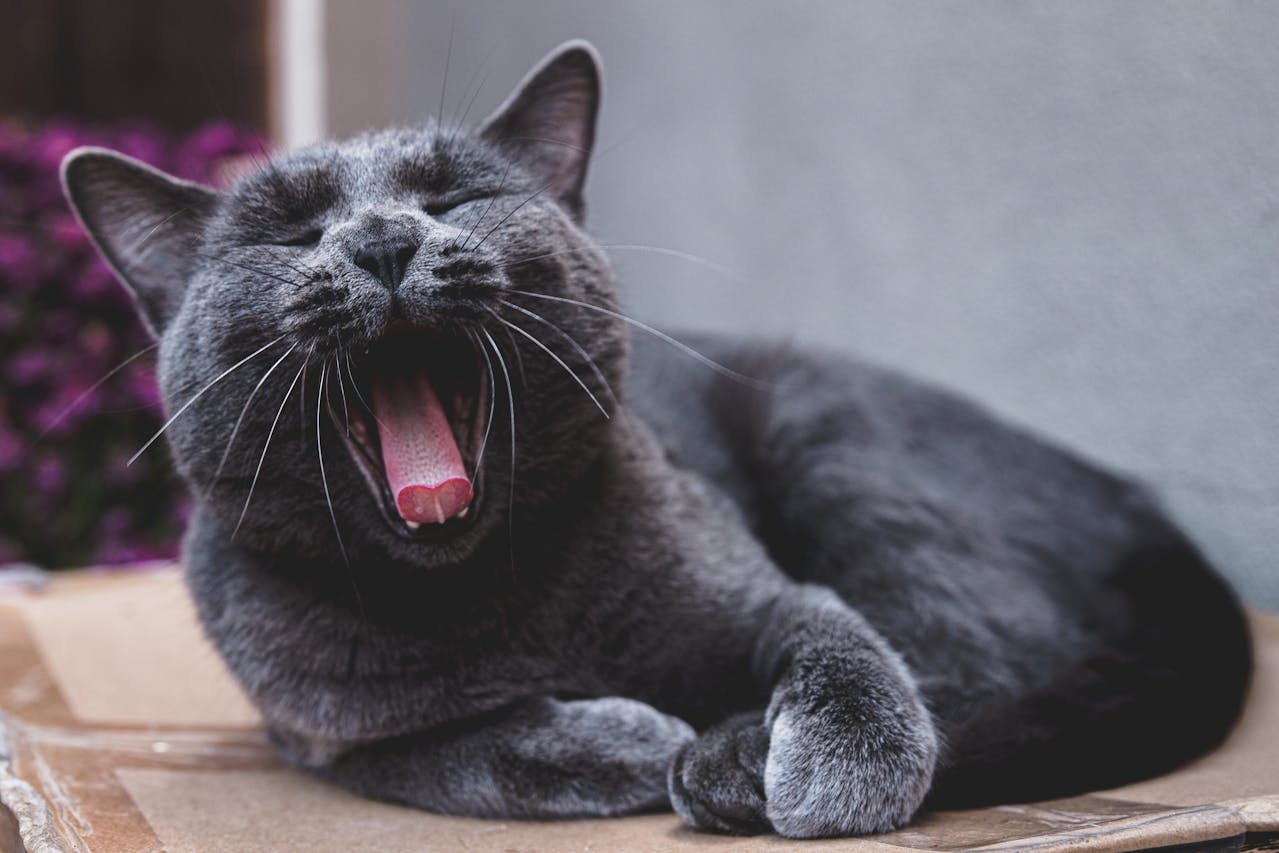
Natural Breed with a Senior Shock: Why Expensive Treatments Come Late in Russian Blues
The Russian Blue is a rare natural breed – it developed in Northern Russia without targeted breeding. This makes it particularly healthy: inherited diseases are rare, the gene pool is broad, life expectancy is exceptionally high. But this longevity fundamentally changes the cost profile.
Musculoskeletal: Constant across all life stages
Musculoskeletal issues are the most common category at 39.2% of all cases – remarkably stable across all life stages: 38.1% in kittens, 41.2% in adults, 50.0% in seniors. The financial impact is moderate: maximum payout €704, avg. €122 per case. Important: Patellar luxation is covered after 18 months of waiting period; congenital forms are excluded.
Senior Dental: The financial peak
While Russian Blues have above-average healthy teeth in their younger years (5.2% of all cases, avg. €468), the picture changes dramatically in old age. In seniors, dental treatments reach avg. €1,716 per case – the highest senior dental value in our database. Common are complex restorations, multiple extractions and FORL treatments.
What this means: Anyone insuring a Russian Blue only in adulthood must wait through the 12-month waiting period for FORL and gingivitis before these expensive treatments are covered. Early insurance at kitten age is therefore particularly valuable.
Life-stage specific cost points
Our claims data shows three distinct cost windows over the lifetime:
- Kittens (0–1 year): respiratory diseases avg. €573 – bronchitis, asthma or coryza during immune system development
- Adults (2–7 years): cardiovascular avg. €328 – most cost-intensive individual examinations in this phase, often preventive ultrasound
- Seniors (8+ years): dental treatments avg. €1,716 – complex restorations, often multiple extractions
Other common conditions
- Hypertrophic Cardiomyopathy (HCM): rarer in Russian Blues than other breeds, but does occur occasionally. Diagnosis via cardiac ultrasound approx. €150–400. Note: HCM is excluded as a genetic feline condition.
- Polycystic Kidney Disease (PKD): rare in this breed. Diagnostics via ultrasound approx. €100–300. Note: Excluded as inherited condition.
- Patellar luxation (PL): polygenetically inherited. Acquired form covered after 18 months; congenital form excluded.
- Dental diseases (FORL, gingivitis): cleaning approx. €150–350, extractions approx. €500–1,500. Covered after 12 months.
- Obesity and secondary conditions: Russian Blues have a pronounced appetite. Diabetes treatment approx. €300–800/year.
- Respiratory diseases: bronchitis, asthma. Treatment approx. €100–500. Covered after 30 days.
- Urinary tract diseases: occasionally observed in Russian Blues. Treatment approx. €200–800. Covered after 30 days.
The cost ranges listed above are based on the German Veterinary Fee Schedule (GOT 2022) and typical market prices in German veterinary practices. Actual costs may vary depending on the practice, the scope of treatment and the chosen GOT rate (1x to 4x). Sources are listed at the end of this page.
What Dalma Actually Reimburses for Russian Blues: Data from 153 Claims
153 Russian Blue claims at Dalma (January 2024 – December 2025). Source: Dalma claims database, March 2026.
Our claims data shows how costs develop over life stages:
Kittens (0–1 year): Musculoskeletal already dominates at 38.1%. Respiratory diseases are financially most significant at avg. €573 per case.
Adults (2–7 years): Musculoskeletal rises to 41.2%. Cardiovascular examinations at avg. €328 per case are the most expensive category in this phase.
Seniors (8+ years): Musculoskeletal reaches 50%. Dental treatments explode to avg. €1,716 per case – by far the highest financial burden in old age.

Focus on the cuddles, we'll focus on the costs.
Surgery Insurance or Full Cover: Which Plan Suits the Russian Blue?
1. Surgery insurance for Russian Blue
Covers costs for surgical procedures – e.g. fractures, tumours or dental restorations. Dalma includes:
- Surgical procedures for illness or accident
- Pre-op diagnostics up to 30 days before surgery
- Post-op clinic stays up to 30 days after surgery
- Medication, bandages and aftercare
- Physiotherapy and alternative treatments up to 30 days post-op
- Dental surgery after waiting period
- Emergency accommodation up to €250 per year
2. Cat health insurance (full cover) for Russian Blue
Covers diagnostics, treatments, medication and preventive care. 80–100% reimbursement, annual limit from €1500 to unlimited. Includes:
- Diagnostics and medical examinations
- Prescribed medication and treatments
- Unlimited physiotherapy
- Alternative treatments such as homeopathy or acupuncture
- Behavioural therapy up to 5 hours per year
- Telemedicine via FirstVet
- Preventive care budget for vaccinations, dental care, deworming (from €1,500 annual limit)
Assessment: For Russian Blues, full cover is particularly worthwhile because the most expensive costs – senior dental treatments and long-term diagnostics – arise late in life. A pure surgery insurance would not cover many of these treatments.
What Does Russian Blue Insurance Cost at Dalma?
- Cat health insurance: from approx. €16 per month
- Surgery insurance: from approx. €8 per month
As of April 2026. Dalma offers 15% discount when insuring multiple pets. Neutering/spaying claimed via the preventive care budget.
From age 10, the reimbursement rate for illnesses decreases by 5% annually. Accident reimbursement remains unchanged. Important for the long-living Russian Blue: those who insure early benefit from years of stable premium structure.
Waiting Periods for Russian Blue
- 2 days for accidents
- 14 days for surgeries
- 30 days for medical treatments
- 12 months for FORL, gingivitis and periodontitis
- 12 months for HD/ED
- 18 months for patellar luxation
Pre-existing conditions are excluded. Preventive care budget is available from day 1.
What Is Not Covered for Russian Blues
The Russian Blue is one of the most robust cat breeds with very few breed-typical inherited conditions. Nevertheless, the general exclusions apply for all cats:
- HCM (Hypertrophic Cardiomyopathy) – rarer in Russian Blues, but excluded as a genetic feline condition
- PKD (Polycystic Kidney Disease) – rare, but excluded as a congenital condition
- PRA (Progressive Retinal Atrophy) – inherited retinal disease
- Congenital patellar luxation and hip dysplasia
- Persistent deciduous teeth
- Epilepsy
- Osteoarthritis
- Diseases preventable by vaccination (cat flu, feline distemper, leukaemia, rabies)
Acquired heart, kidney, eye and joint problems are covered after the waiting period. Since the Russian Blue has a very long life phase with acquired age-related conditions, insurance protection is particularly valuable.
Focus on the cuddles, we'll focus on the costs.
Claims Process at Dalma
100% digital. Upload invoice via app, 8-day deadline. Reimbursement target 48 hours (contractually up to 5 working days). Up to 4x GOT rate including emergency surcharges. Free choice of vet worldwide. Telemedicine via FirstVet free and unlimited. Neutering and spaying can be claimed via preventive care budget.
Russian Blue Insurance: Who Benefits Most
Early insurance pays off particularly: Russian Blues live 13–20 years. The most expensive treatments come after age 8. Insuring at kitten age means you have 8+ years of insurance protection by the time of the first senior dental treatment – the 12-month waiting period for FORL has long expired.
Full cover instead of OP-only: Senior dental restorations at avg. €1,716 per case often fall into the dental-surgery range, but also as outpatient treatments. Full cover handles both scenarios.
Less value: If your Russian Blue already has an HCM, PKD or PL diagnosis before contract start. However, these diagnoses are comparatively rare in this breed.
A calculation: A Russian Blue requiring its first senior dental restoration at age 9 (avg. €1,716), two preventive ultrasounds (approx. €200 each) and a musculoskeletal treatment (avg. €122) quickly reaches €2,200–€2,500 in covered costs.
Frequently Asked Questions About Russian Blue Insurance
Is cat health insurance worthwhile for Russian Blues?
Yes – even though the breed is considered robust. Our 153 claims show that the most expensive costs come in old age. Senior dental treatments cost avg. €1,716 per case – a clear argument for early insurance protection.
Does the Russian Blue have many inherited conditions?
No. The Russian Blue is a natural breed and one of the cat breeds with the fewest known inherited conditions. HCM, PL and PKD occur only occasionally and are excluded as genetic.
How old does a Russian Blue get?
Russian Blues are among the longest-living domestic cats. Life expectancy is 13 to 20 years, in some cases even longer.
Are dental treatments covered for Russian Blues?
Yes. FORL, gingivitis and periodontitis are covered after a 12-month waiting period. Dental surgery also falls under the surgery plan. Routine dental cleaning can be claimed via the preventive care budget.
Are respiratory diseases covered for Russian Blues?
Yes. Bronchitis, asthma and consequences of cat flu are covered after 30 days waiting period. In kittens, these treatments are above-average expensive at avg. €573 per case.
Are obesity and secondary conditions covered?
Obesity itself is not an insurable condition. However, secondary conditions like diabetes mellitus are covered after 30 days waiting period, provided they were not known as pre-existing.
Are patellar luxations covered for Russian Blues?
Yes, provided it is not a congenital form. Acquired patellar luxations are covered after 18 months of waiting period.
Is there a deductible at Dalma for cats?
No. Dalma has no deductible. Depending on the plan, 80–100% of eligible costs are reimbursed.
Can I insure my Russian Blue as an adult?
Yes. Insurance can be taken out at Dalma up to an age of under 9 years. Pre-existing conditions are excluded.
Does my Russian Blue stay insured after an expensive treatment?
Yes. Dalma waives the right to cancel after a claim.
Sources and Further Information
The veterinary costs mentioned in this article are reference values. Actual costs are governed by the German Veterinary Fee Schedule (GOT) and may vary depending on the practice, the scope of treatment and the chosen GOT rate (1x to 4x).
Official sources on the German Veterinary Fee Schedule (GOT 2022):
- Full text of the GOT 2022: https://www.gesetze-im-internet.de/got_2022/
- German Veterinary Association (BTK): bundestieraerztekammer.de – official body with information on GOT, emergency service and billing
- German Federal Ministry of Agriculture (BMLEH): bmleh.de/DE/themen/tiere/got.html – background on the 2022 GOT amendment
Claims data:
The claims data used in this article is based on 153 Russian Blue illness cases from the Dalma claims database between January 2024 and December 2025.
Sources and Further Information
The veterinary costs mentioned in this article are reference values. Actual costs are governed by the German Veterinary Fee Schedule (GOT) and may vary depending on the practice, the scope of treatment and the chosen GOT rate (1x to 4x).
Official sources on the German Veterinary Fee Schedule (GOT 2022):
- Full text of the GOT 2022: https://www.gesetze-im-internet.de/got_2022/
- German Veterinary Association (BTK): bundestieraerztekammer.de – official body with information on GOT, emergency service and billing
- German Federal Ministry of Agriculture (BMLEH): bmleh.de/DE/themen/tiere/got.html – background on the 2022 GOT amendment
Claims data:
The claims data used in this article is based on 153 Russian Blue illness cases from the Dalma claims database between January 2024 and December 2025.


