
Quiet Natural Breed with Minimal Inherited Risk: What Chartreux Face at the Vet
Few pedigree cats come with as few breed-typical risks as the Chartreux. Multiple sources agree: it is "not sensitive", "robust and healthy" and has "hardly any documented breed-typical inherited diseases". What does that mean for insurance? Instead of specific inherited disease questions, the Chartreux is primarily about general topics – and this is exactly where insurance makes sense.
The only notable breed-typical condition
Patellar Luxation (PL)
A dislocation of the kneecap, four severity grades possible. Favoured by malalignments of the upper and lower leg. Can lead to arthritis long-term. In the Chartreux, PL only occurs occasionally – not to the same extent as in many small dog breeds or some other pedigree cats. Note: Acquired patellar luxation covered after 18 months waiting period; congenital form excluded.
FNI: A breeding question, not an owner topic
Feline Neonatal Isoerythrolysis (FNI) is a blood group incompatibility between mother cat and her kittens. It occurs when a queen with blood group B is mated with a male of blood group A or AB – kittens with blood group A may then absorb antibodies from mother's milk that destroy their red blood cells.
Important: FNI is a breeding problem that can be avoided through blood group determination of parent animals. Reputable breeders perform this test routinely. As a later owner of a healthy Chartreux, FNI no longer occurs with you – the disease manifests, if at all, in the first days of life at the breeder.
General topics that are really insurable
- Obesity and secondary conditions: Neutered Chartreux males tend toward obesity. Diabetes, joint problems and heart strain may follow. Acquired diabetes covered after 30 days.
- Dental conditions: Occasional gingivitis and tartar formation. Covered after 12 months (FORL, gingivitis, periodontitis).
- Bladder stones and urinary tract conditions: documented in Chartreux. Diagnostics and therapy covered after 30 days.
- Polycystic Kidney Disease (PKD): described in individual animals, but not as common as in Persians or BSH. Note: Excluded as inherited condition.
- Injuries: Chartreux are less jump-strong than Orientals, but as outdoor cats still accident-prone. Covered after 2 days waiting period.
- Gastrointestinal topics: Hairball problems due to dense double coat. Covered after 30 days, surgery after 14 days.
- Eye problems: general eye infections, no breed-typical risk. Covered after 30 days.
- General infections: cat flu, FIP, leukosis – covered, provided vaccination protection is in place.
The cost ranges listed above are based on the German Veterinary Fee Schedule (GOT 2022) and typical market prices in German veterinary practices. Actual costs may vary depending on the practice, the scope of treatment and the chosen GOT rate (1x to 4x).
Chartreux or British Shorthair? What You Really Need to Watch When Buying a Kitten
Recognising a real Chartreux is not so easy. After World War II, Chartreux and British Shorthair were crossed to preserve the gene pool – with the result that many "Chartreux" kittens today are actually blue British Shorthairs. The FIFe (world federation) only officially banned these crossings in 1977.
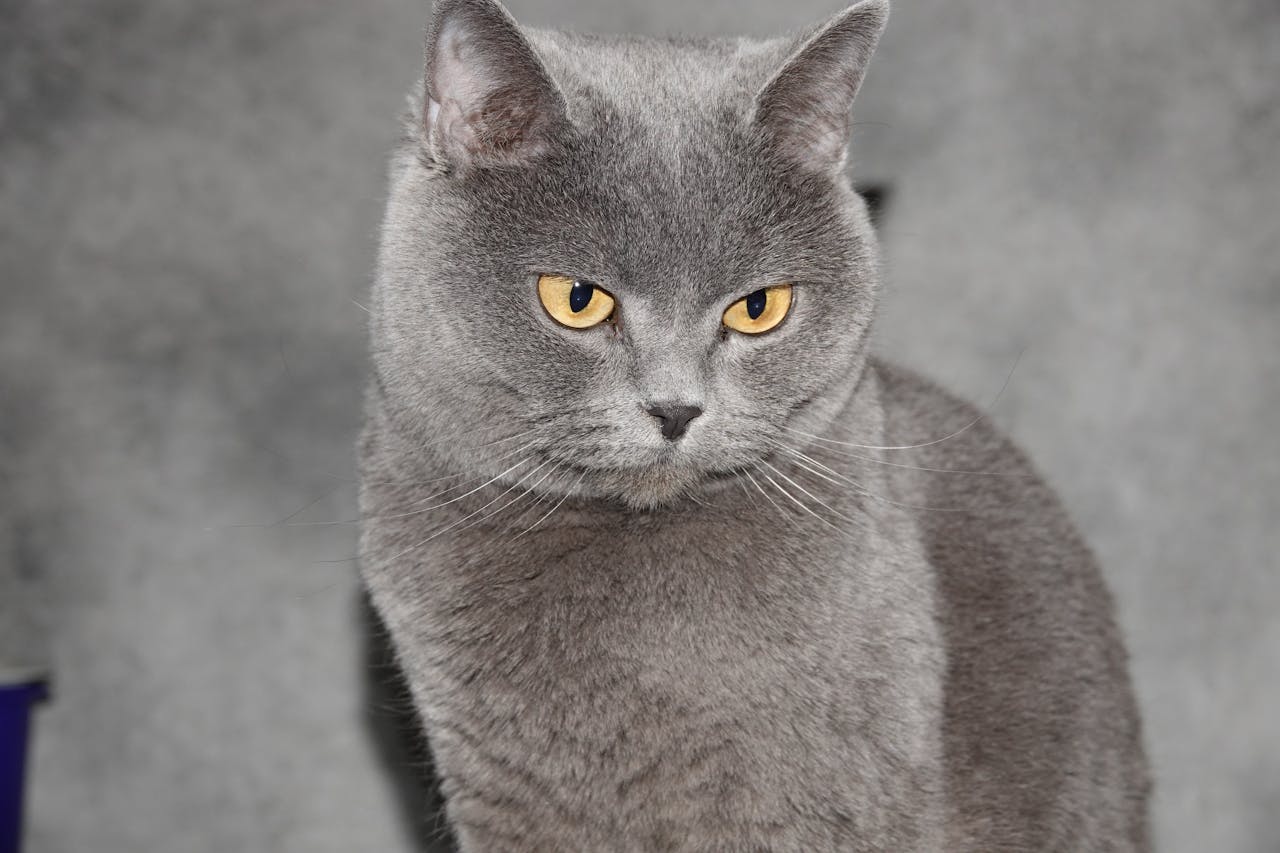
What distinguishes a real Chartreux from a blue BSH? Appearance: The Chartreux has a trapezoidal head with "smile", gold to copper-coloured eyes, longer legs and a muscular, elongated body. The BSH has a rounder head with shorter snout and a more compact, plush body. Character: Chartreux are calm and quiet – some hardly meow or are even silent. BSHs are often somewhat more active.
Kitten purchase checklist:
- Check pedigree: A reputable breeder is a member of FIFe, WCF, TICA or Chartreux d'Europe and can document seamless ancestry.
- Blood group determination of parent animals: prevents FNI risk in kittens.
- Patellar luxation examination: standard for breeding cats, should be documented.
- Vaccination passport and health check: incl. vet certificate at sale.
- Plan for late development: Chartreux are fully grown only at 2 to 4 years – slower than most other breeds.
- Written purchase contract: incl. warranty for inherited disease manifestation in early years.
Prices: A Chartreux kitten from reputable breeding costs between €800 and €1,700. Privately offered animals without papers are often cheaper – but usually they are not real Chartreux either.

Focus on the cuddles, we'll focus on the costs.
Surgery Insurance or Full Cover: Which Plan Suits the Chartreux?
1. Surgery insurance for Chartreux
Covers costs for surgical procedures – e.g. patellar luxation, bladder stones, injuries or tumour surgery. Dalma includes:
- Surgical procedures for illness or accident
- Pre-op diagnostics up to 30 days before surgery
- Post-op clinic stays up to 30 days after surgery
- Medication, bandages and aftercare
- Physiotherapy and alternative treatments up to 30 days post-op
- Dental surgery after waiting period
- Emergency accommodation up to €250 per year
2. Cat health insurance (full cover) for Chartreux
Covers diagnostics, treatments, medication and preventive care. 80–100% reimbursement, annual limit from €1500 to unlimited. Includes:
- Diagnostics and medical examinations
- Prescribed medication and treatments
- Unlimited physiotherapy
- Alternative treatments such as homeopathy or acupuncture
- Behavioural therapy up to 5 hours per year
- Telemedicine via FirstVet
- Preventive care budget for vaccinations, dental care, deworming (from €1,500 annual limit)
Assessment: For the Chartreux, even surgery cover is already a sensible minimum protection – the breed is robust, but injuries, obesity consequences and senior topics can still become expensive. Those who want more security choose full cover: diagnostics, dental restorations and senior kidney insufficiency often arise on an outpatient basis.
What Does Chartreux Insurance Cost at Dalma?
- Cat health insurance: from approx. €16 per month
- Surgery insurance: from approx. €8 per month
As of April 2026. Dalma offers 15% discount when insuring multiple pets. Neutering/spaying claimed via the preventive care budget.
From age 10, the reimbursement rate for illnesses decreases by 5% annually. Accident reimbursement remains unchanged.
Waiting Periods for the Chartreux
- 2 days for accidents
- 14 days for surgeries
- 30 days for medical treatments
- 12 months for FORL, gingivitis and periodontitis
- 12 months for HD/ED
- 18 months for patellar luxation
Pre-existing conditions are excluded. Preventive care budget is available from day 1. Since the Chartreux is a late developer, early insurance pays off particularly – the 18-month waiting period for patellar luxation has expired at 1.5 years, long before the animal is fully grown.
What Is Not Covered for the Chartreux
For the Chartreux, few breed-relevant exclusions apply alongside general feline exclusions:
- Congenital patellar luxation – excluded as congenital form
- Feline Neonatal Isoerythrolysis – concerns the breeder (blood group pairing)
- PKD (Polycystic Kidney Disease) – as inherited condition
- HCM (Hypertrophic Cardiomyopathy) – general exclusion
- Brachycephalic syndrome (not relevant for Chartreux, general exclusion)
- Congenital eye diseases
- PRA (Progressive Retinal Atrophy)
- Persistent deciduous teeth
- Epilepsy
- Osteoarthritis
- Diseases preventable by vaccination (cat flu, feline parvovirus, leukosis)
Acquired patellar luxation, bladder stones, senior kidney insufficiency, diabetes and other acquired conditions are covered after the waiting period. Due to the robust natural breed characteristics of the Chartreux, insurance benefits are particularly effective for this breed.
Focus on the cuddles, we'll focus on the costs.
Claims Process at Dalma
100% digital. Upload invoice via app, 8-day deadline. Reimbursement target 48 hours (contractually up to 5 working days). Up to 4x GOT rate including emergency surcharges. Free choice of vet worldwide. Telemedicine via FirstVet free and unlimited. Neutering and spaying can be claimed via preventive care budget.
Chartreux Insurance: Who Benefits Most
Robust breed, sensible insurance: Precisely because the Chartreux has so few breed-typical inherited diseases, insurance is effective: almost everything that happens is insurable (apart from the few excluded congenital conditions).
Keep an eye on weight: Neutered Chartreux males tend toward obesity. Behavioural therapy and diabetes treatment are included in full cover – both relevant for this breed.
Senior insurance pays off: With the high life expectancy (12–18 years), early protection is particularly worthwhile – also regarding senior topics like kidney insufficiency and dental conditions.
Less value: If your Chartreux already has a PL, PKD or diabetes diagnosis. These are considered pre-existing conditions. Other diseases remain insurable.
Frequently Asked Questions About Chartreux Insurance
Is health insurance worthwhile for a Chartreux?
Yes, precisely because the Chartreux is a robust breed with few exclusions. What happens (injuries, senior kidney insufficiency, diabetes, dental conditions, bladder stones) is mostly covered. Insurance benefits are particularly effective for this breed.
Are Chartreux and British Shorthair really different?
Yes, since 1977 they have officially been two independent breeds. Chartreux have a trapezoidal head with "smile", gold eyes and a muscular, elongated body. BSHs are more compact and plush.
Is patellar luxation covered for the Chartreux?
Acquired patellar luxation is covered after 18 months of waiting period. Congenital form excluded. PL is rather rare in Chartreux – occurs only "occasionally".
What is Feline Neonatal Isoerythrolysis?
FNI is a blood group incompatibility between mother cat (blood group B) and kittens (blood group A). It exclusively concerns breeding – as a later owner, you can avoid the risk by choosing a reputable breeder with blood group determination.
Are bladder stones covered?
Yes. Acquired bladder stones and urinary tract conditions are covered after 30 days of waiting period. Chartreux have a certain risk here, which can be reduced with sufficient water intake and high-quality food.
Are diabetes and obesity consequences covered?
Yes. Acquired diabetes and obesity-related secondary conditions are covered after 30 days of waiting period. Lifelong insulin therapy is covered.
How old does a Chartreux get?
Life expectancy is 12 to 18 years. Due to its robust gene pool and natural selection in history, it ranks among the longest-living pedigree cats.
Do Chartreux need much activity?
Moderate. Chartreux are calm, balanced cats – they enjoy play time but do not demand it intensely. Ideal for working professionals and quieter households. Indoor keeping also possible.
Is there a deductible at Dalma?
No. Dalma has no deductible. Depending on the plan, 80–100% of eligible costs are reimbursed.
Does my Chartreux stay insured after an expensive treatment?
Yes. Dalma waives the right to cancel after a claim.
Sources and Further Information
The veterinary costs mentioned in this article are reference values. Actual costs are governed by the German Veterinary Fee Schedule (GOT) and may vary depending on the practice, the scope of treatment and the chosen GOT rate (1x to 4x).
Official sources on the German Veterinary Fee Schedule (GOT 2022):
- Full text of the GOT 2022: https://www.gesetze-im-internet.de/got_2022/
- German Veterinary Association (BTK): bundestieraerztekammer.de – official body with information on GOT, emergency service and billing
- German Federal Ministry of Agriculture (BMLEH): bmleh.de/DE/themen/tiere/got.html – background on the 2022 GOT amendment
Sources on Chartreux inherited diseases and breed recognition:
- Veterinary literature on patellar luxation and Feline Neonatal Isoerythrolysis
- FIFe recognition 1977: official separation from British Shorthair
- Chartreux d'Europe: interest group of Chartreux breeders
Sources and Further Information
The veterinary costs mentioned in this article are reference values. Actual costs are governed by the German Veterinary Fee Schedule (GOT) and may vary depending on the practice, the scope of treatment and the chosen GOT rate (1x to 4x).
Official sources on the German Veterinary Fee Schedule (GOT 2022):
- Full text of the GOT 2022: https://www.gesetze-im-internet.de/got_2022/
- German Veterinary Association (BTK): bundestieraerztekammer.de – official body with information on GOT, emergency service and billing
- German Federal Ministry of Agriculture (BMLEH): bmleh.de/DE/themen/tiere/got.html – background on the 2022 GOT amendment
Sources on Chartreux inherited diseases and breed recognition:
- Veterinary literature on patellar luxation and Feline Neonatal Isoerythrolysis
- FIFe recognition 1977: official separation from British Shorthair
- Chartreux d'Europe: interest group of Chartreux breeders


