
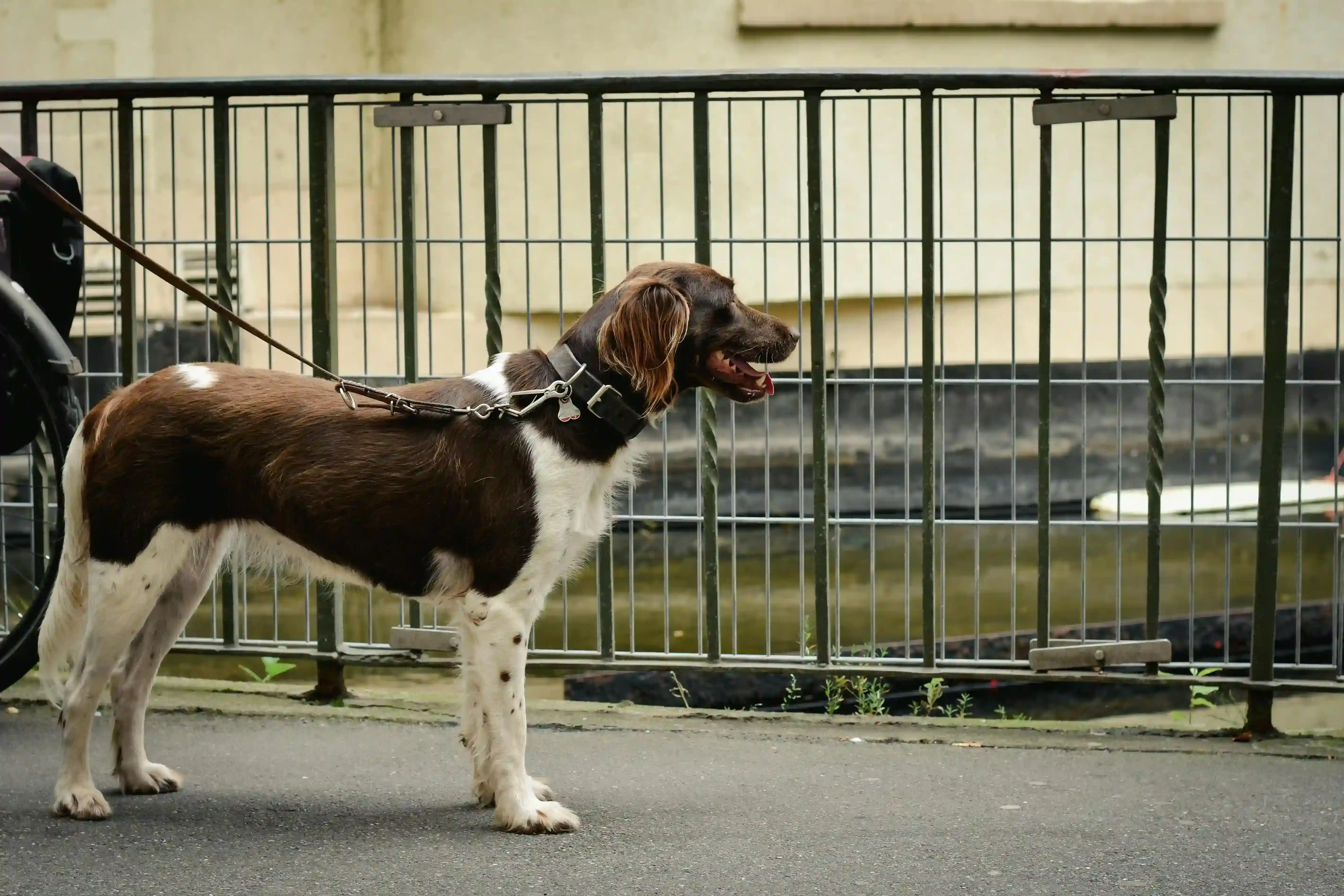
Why Autumn Is the Most Expensive Season for Munsterlander Owners – and What Is Covered
The Munsterlander is not a dog that distributes its injury risk evenly throughout the year. In autumn and winter – when undergrowth is dense, ground is wet, and grass awns are ripe – vet visits for Munsterlander owners increase noticeably.
What typically happens during everyday terrain activities:
· Cuts from thorns, blackberry bushes, and barbed wire: The most common terrain injury. Often on paws, chest, or ears. Treatment: €150–500 per incident.
· Foreign bodies: Grass awns (grass blades that bore into skin or ear canal) are a classic issue for Munsterlanders in late summer and autumn. Removal under sedation: €100–300.
· Tick bite infections: Lyme disease, anaplasmosis, and TBE-like pathogens. Munsterlanders are above-average exposed due to their time in forests and fields. Diagnostics + treatment: €150–600.
· Fractures and luxations from rapid direction changes on terrain: X-ray + surgery €1,200–2,500.
· Gastrointestinal problems from ingested foreign bodies or contaminated water: €80–300 per treatment.
Injuries and infections that occur in normal everyday life – during walks, off-leash exercise, or playing in the forest – are covered by Dalma. Accidents after just 2 days, medical treatments after 30 days.
Important restriction for hunting-trained Munsterlanders:
Treatment costs caused or aggravated by participation in hunting, organized fights, races, sports competitions, and the associated training are excluded from insurance coverage according to Dalma's terms and conditions.
Specifically, this means: If your Munsterlander gets injured during an organized hunt – for example from a tear in the undergrowth, a fracture during tracking, or a foreign body during retrieving – the insurance does not apply. Injuries that occur outside of hunting in normal terrain activities (walks in the forest, off-leash in the field, playing with other dogs), on the other hand, are fully covered.
If you regularly use your Munsterlander for hunting, you should consider this exclusion in your decision. The insurance still protects you for all non-hunting-related conditions and accidents – and these account for the majority of vet costs.
Munsterlander Health Profile: All Common Conditions and Their Costs
In addition to seasonal injuries, there are further cost risks. The most common conditions and their typical costs:
· Cruciate Ligament Tear: Surgery €1,800–3,500.
· Hip Dysplasia (not congenital): Diagnostics €200–350, surgery €1,200–3,000.
· Elbow Dysplasia (not congenital): Diagnostics €300–600, surgery €1,500–3,500.
· Terrain injuries (cuts, fractures, luxations): €150–2,500.
· Ear infections (otitis): €100–300, in chronic cases up to €600 annually.
· Allergies and skin problems: €200–800 per year.
· Gastrointestinal infections: €80–300 per treatment.
· Eye infections or corneal injuries (not congenital): Diagnostics €100–300, surgery up to €1,500.
· Parasitenbefall (z. B. Giardien): €50–200.
· Tick bite-related infections: €150–600.
Note: Some conditions are not insurable if they are congenital. Details can be found in the section “What is not covered for the Munsterlander”.

Focus on the cuddles, we'll focus on the costs.
Surgical Insurance or Full Cover: Which Plan Suits the Munsterlander?
1. Surgical Insurance for Munsterlanders
Surgical insurance covers necessary surgical procedures. Included at Dalma:
· Surgical procedures for illness or accident
· Diagnostics and preliminary examinations up to 30 days before surgery
· Hospital stays up to 30 days after surgery
· Medication, bandages, and aftercare
· Physiotherapy and alternative treatments up to 30 days after surgery
· Dental surgery after waiting period
· Emergency boarding up to €250 per year
2. Dog Health Insurance (Full Cover) for Munsterlanders
Covers diagnostics, treatments, medication, and preventive care. 80 to 100 percent reimbursement, annual maximum benefit between €1,500 and unlimited. Included are among others:
· Diagnostics and medical examinations
· Prescribed medication and treatments
· Unlimited physiotherapy
· Alternative treatments such as osteopathy or acupuncture
· Behavioral therapy up to 5 hours per year
· Telemedicine via FirstVet
· Preventive care budget for vaccinations, dental care, and deworming (from €1,500 annual maximum benefit)
Assessment: Munsterlanders particularly benefit from full cover, as in addition to surgeries, frequent wound care, antibiotic treatments after tick bites, physiotherapy, and gastrointestinal treatments are also needed.
What Does Munsterlander Insurance Cost at Dalma?
Typical costs at Dalma:
· Dog health insurance: from €25 per month
· Surgical insurance: from €9 per month
As of March 2026. Dalma offers a 15 percent discount when insuring multiple dogs.
From the 10th year of life, the reimbursement rate for illnesses decreases by 5% annually. For accidents, it remains unchanged.
Waiting Periods for the Munsterlander
· 2 days for accidents – the most important immediate protection for a field dog.
· 14 days for surgeries
· 30 days for medical treatments
· 12 months for HD/ED (non-congenital forms)
· 12 months for dental treatments such as FORL
· 18 months for patellar luxation
Pre-existing conditions that exist before the policy starts are excluded.
What Is Not Covered for the Munsterlander – Including the Hunting Exclusion
In addition to the usual exclusions for congenital or genetic conditions, there is a particularly relevant point for the Munsterlander: the hunting exclusion.
Generally not covered:
· Congenital joint malpositions
· Congenital cataract
· Epilepsy
· Treatments related to pregnancy and birth
· Cosmetic surgical procedures
· Conditions due to lack of vaccination
Hunting and sports competition exclusion:
· Treatment costs from participation in hunting – including tracking, retrieving work, and all hunting operations.
· Treatment costs from organized fights, races, or sports competitions and the associated training.
Covered, however, are:
· Injuries in normal everyday life (walks, off-leash exercise, playing, roughhousing)
· Acquired joint conditions such as HD/ED (after 12 months)
· Patellar luxation (after 18 months)
· Non-congenital dental diseases (after 12 months)
· Acquired eye and skin problems
· Infections from ticks, parasites, and gastrointestinal pathogens
Focus on the cuddles, we'll focus on the costs.
Reimbursement at Dalma
100% digital. Upload invoice via app, deadline 8 days. Reimbursement target 48 hours (contractually up to 5 business days). Up to 4x GOT rate including emergency service fees. Free choice of vet worldwide. Telemedicine via FirstVet free and unlimited.
Insuring a Munsterlander: When It's Worth It – and When the Hunting Exclusion Becomes Relevant
Insure early: Insurance is most worthwhile at puppy age. Many orthopedic conditions or infections only appear later and are then considered acquired, making them insurable.
Particularly worthwhile for family Munsterlanders: If your Munsterlander is primarily kept as a family and companion dog, you benefit fully from complete insurance coverage. Terrain walks, off-leash in the forest, retrieving games in the garden – all of this is normal everyday life and covered.
Limited for hunting use: If you regularly use your Munsterlander in organized hunts, injuries during these deployments are not covered. However, the insurance still protects you for all non-hunting-related conditions and accidents – and from experience, these account for the majority of vet costs (HD, ED, tick infections, allergies, gastrointestinal issues).
Frequently Asked Questions About Munsterlander Insurance
Is dog health insurance worthwhile for Munsterlanders?
Yes, dog health insurance is very worthwhile for Munsterlanders. Due to their high drive for movement and regular activity on terrain, Munsterlanders have an increased risk of injuries, joint problems, and infections. Important: Injuries from participation in hunting are excluded.
Are injuries during walks in the forest covered?
Yes. Injuries that occur in normal everyday life during walks, off-leash exercise, or playing are covered by Dalma. For accidents, coverage takes effect after 2 days waiting period. The exclusion only applies to organized hunting, races, and sports competitions.
Are hunting injuries covered for the Munsterlander?
No. Treatment costs caused or aggravated by participation in hunting, organized fights, races, sports competitions, and the associated training are excluded from insurance coverage according to Dalma's terms and conditions.
Is hip or elbow dysplasia covered for the Munsterlander?
Non-congenital forms of hip or elbow dysplasia are covered after the 12-month waiting period has elapsed.
Are infections and parasites covered for the Munsterlander?
Yes, infections such as gastrointestinal diseases, Giardia, or tick-borne diseases are covered if they occur after the insurance starts and did not arise during a hunt.
Is surgical insurance sufficient for a Munsterlander?
Surgical insurance can be worthwhile to cover high costs for serious injuries or joint operations. However, since Munsterlanders also frequently need diagnostics, medication, physiotherapy, or recurring treatments, full cover provides better protection.
Does the insurance cover physiotherapy for the Munsterlander?
Yes, physiotherapy is included unlimited in full cover and is covered in the surgical plan for a limited period after the operation.
Is there a deductible at Dalma for Munsterlanders?
No, there is no deductible at Dalma. 80 to 100 percent reimbursement, without copayment.
Can I also insure my Munsterlander as an adult dog?
Yes, enrollment at Dalma is possible up to an age of under 9 years. Already known conditions are considered pre-existing conditions and are excluded.
Will the policy be cancelled after high vet costs?
No, Dalma does not cancel the insurance policy after a claim.


