
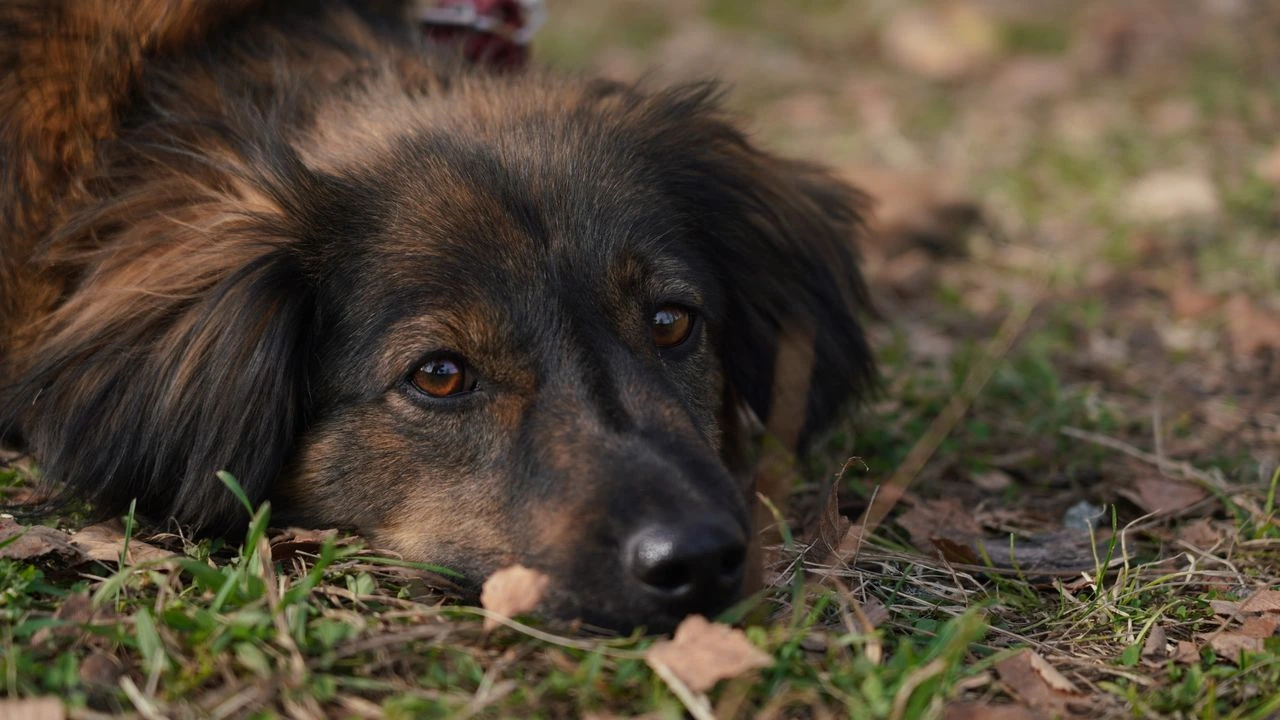
What poisoning in dogs is and when it occurs more often
This article is part of our seasonal calendar of dog health, which shows you the dangers your dog faces over the year.
Poisoning is when your dog's body comes into contact with a harmful substance, usually through eating, more rarely through the skin or airways. How severe it becomes depends on the substance, the amount taken in and the size of your dog. A small dog tolerates considerably less than a large one, and some poisons are dangerous even in tiny amounts.
Our data shows a clear seasonal pattern. Of around 23,700 evaluated treatment incidents of 50 euros and above, 214 were poisonings. As our seasonal calendar of dog health shows, poisonings cluster in winter a good 1.6 times as strongly as the yearly average, which fits chocolate, festive leftovers and antifreeze in the cold season. The most common named trigger is indeed chocolate, followed by rat poison and xylitol. Many cases name no exact source, so this list should be read as an indication, not as a complete statistic.
Common poisons in the home, garden and food
Some dangers stand openly in the kitchen, others lurk in the garden or out and about. With the following quick check you can see at a glance how dangerous a substance is and what to do:
These substances belong out of your dog's reach:
| Poison | Where it occurs | Why it is dangerous |
|---|---|---|
| Chocolate | sweets, baking ingredients | theobromine acts on the heart and nerves, dark chocolate and baking cocoa especially strongly |
| Xylitol (birch sugar) | sugar-free sweets, chewing gum, baked goods | makes blood sugar crash and damages the liver |
| Grapes and raisins | fruit, muesli, pastries | can severely damage the kidneys even in small amounts |
| Onions and garlic | leftovers, seasoned dishes | destroy the red blood cells, even cooked and dried |
| Macadamia | nuts, pastries | trigger weakness, trembling and fever |
| Walnuts | nuts, windfall fruit, above all mouldy | mould toxins lead to trembling and cramps |
| Alcohol and caffeine | drinks, raw yeast dough, coffee | act strongly on the heart and nervous system |
| Medicines | ibuprofen, paracetamol | even single tablets are highly toxic |
| Rat poison | garage, shed, bait boxes | inhibits blood clotting, symptoms often only after days |
| Antifreeze | garage, winter road service | sweet taste, even small amounts very toxic for the kidneys |
| Slug pellets | garden, flower beds | metaldehyde triggers severe cramps |
| Blue-green algae | standing, warm water in summer | highly toxic, can lead to liver failure and cramps |
| Toxic plants | lily of the valley, yew, autumn crocus | depending on the plant, from vomiting to heart failure |

Focus on the cuddles, we'll focus on the costs.
Recognising the symptoms of a poisoning, acute and slow
The signs depend heavily on the poison. It helps to order them by area:
- Stomach and intestines: vomiting, diarrhoea, partly with blood, heavy drooling, retching, abdominal pain.
- Nervous system: trembling, muscle twitching, cramps, staggering, disorientation, clouded consciousness.
- Circulation: fast or irregular heartbeat, pale, yellowish or dark red mucous membranes, weakness up to collapse.
- General: listlessness, loss of appetite, increased drinking, fever or low temperature.
Not every poisoning strikes at once. A slow poisoning only shows after hours, days or, with repeated intake, even over weeks. The classic example is rat poison, which inhibits blood clotting: for the first few days the dog often seems normal, then weakness, pale mucous membranes, nosebleeds or bruising set in. Some plants or a constant intake of small amounts of poison also act slowly. If your dog is listless for several days, eats poorly or vomits again and again, that needs checking, even without a clear trigger.
How a poisoning progresses and how long it lasts
How long a poisoning lasts cannot be said in general, because it depends on the substance, the amount and the treatment. A few examples for orientation:
- Chocolate and caffeine usually take effect within 6 to 12 hours.
- Xylitol can make blood sugar crash after just 30 to 60 minutes, the liver damage shows later.
- Rat poison often only takes effect after 2 to 5 days.
- With grapes or antifreeze, kidney damage looms over one to several days.
With quick veterinary help many dogs recover well. With a large amount or late treatment, on the other hand, permanent organ damage can occur. The time window is decisive, so you do not wait to see whether the symptoms disappear on their own.
What to do if you suspect poisoning, the first-aid measures
If you suspect poisoning, every minute counts. Proceed as follows:
- Stay calm and get your dog away from the source of the poison.
- Call your vet practice or the veterinary emergency service straight away and describe the situation.
- If possible, secure clues to the poison: packaging, plant remains, a sample of vomit.
- Note what, how much and when your dog took in, and how much it weighs.
- Drive to the practice without delay; it is best if someone calls ahead so everything is prepared.
If your dog is unconscious, place it in the recovery position and turn the head so that saliva and vomit can drain away freely. Do not put a muzzle on it.
What you should not do:
- Do not induce vomiting on your own. With caustic or foaming substances this does more harm, and with a dazed dog it risks choking.
- Do not give salt, milk or home remedies. Salt itself can lead to a dangerous poisoning.
- Do not wait and do not just watch for hours.
How to act calmly and correctly in an emergency is also shown in our guide on first aid for dogs.
What the vet does in a poisoning
Knowing what happens at the practice takes some of the fear out of an emergency. Depending on the poison, the amount and the time since intake, various steps are available:
- Stabilise: first, circulation, breathing and consciousness are secured; for cramps, medication is used.
- Limit poison intake: if intake is fresh, vomiting can be induced deliberately under supervision. Activated charcoal binds poison in the gut, and in some cases the stomach is flushed.
- Flush out and protect: infusions support circulation and help the kidneys and liver to excrete the poison.
- Antidote: for some poisons there is a specific antidote, for example vitamin K1 for certain rat poisons.
- Monitor: in severe cases the dog stays for inpatient observation, often with blood and organ checks.
Precisely because a lot comes together quickly here, the early call to the practice is so important.
Focus on the cuddles, we'll focus on the costs.
Recognising and preventing poison bait in dogs
Poison bait is laid out deliberately, in parks, along paths and on meadows. Often it is pieces of sausage or meat with poison, slug pellets or hidden razor blades and nails. This is rarely visible, so prevention counts.
This is how you lower the risk:
- Train a reliable recall and anti-poison-bait training, in which your dog learns to pick up edible things off the ground only on release.
- Practise a clear stop signal such as "leave it" and reward letting go.
- At known problem spots, keep an eye on the surroundings and, if needed, use a muzzle your dog has been calmly accustomed to.
- If you find bait, secure the spot, warn other owners and report the find to the public order office or the police.
If your dog suddenly shows retching, cramps, heavy drooling or blood after a walk, you drive to the emergency service straight away and do not give anything on your own.
Possible late effects and aftercare
Depending on the poison and the amount, a poisoning can leave traces. Possible are damage to the liver and kidneys, disorders of blood clotting, heart problems and, in severe cases, permanent organ damage. Some effects only show up with a delay.
That is why the follow-up check is important, even if your dog feels better again after the initial treatment. Often blood values and organ function are checked once more. Keep to the check-up appointments and watch your dog attentively in the days afterwards.
What a poisoning treatment costs and how Dalma protects you
Treating a poisoning can be involved. Depending on the case, emergency admission, infusions, antidotes, blood tests and inpatient monitoring come together. That shows in our data: for poisonings the reimbursement is a median of around 208 euros and thus well above the general average, with single cases reaching around 5,600 euros.
With Dalma's pet health insurance the treatment is reimbursed within your tariff up to 4 times the GOT rate, including the consequences of poison bait. We cover emergency-service surcharges against proof. You choose a reimbursement of 80 or 100 percent and an annual benefit limit from 1,500 euros to unlimited. That way, in an emergency you can decide what is best for your dog without a glance at the invoice.
Sources
- Dalma consumer information
- Dalma table of benefits
- CliniTox, University of Zurich, Institute of Veterinary Pharmacology and Toxicology, toxic substances and poisonous plants in small animals (German)
- German Federal Association for Animal Health, first aid for poisonings (guide by the University of Veterinary Medicine Hannover) (German)
- Internal Dalma DE claims database, dog, cases of 50 euros and above, evaluated at incident level (214 poisoning incidents, aggregated analysis, reproducibly documented)
Sources
- Dalma consumer information
- Dalma table of benefits
- CliniTox, University of Zurich, Institute of Veterinary Pharmacology and Toxicology, toxic substances and poisonous plants in small animals (German)
- German Federal Association for Animal Health, first aid for poisonings (guide by the University of Veterinary Medicine Hannover) (German)
- Internal Dalma DE claims database, dog, cases of 50 euros and above, evaluated at incident level (214 poisoning incidents, aggregated analysis, reproducibly documented)


