
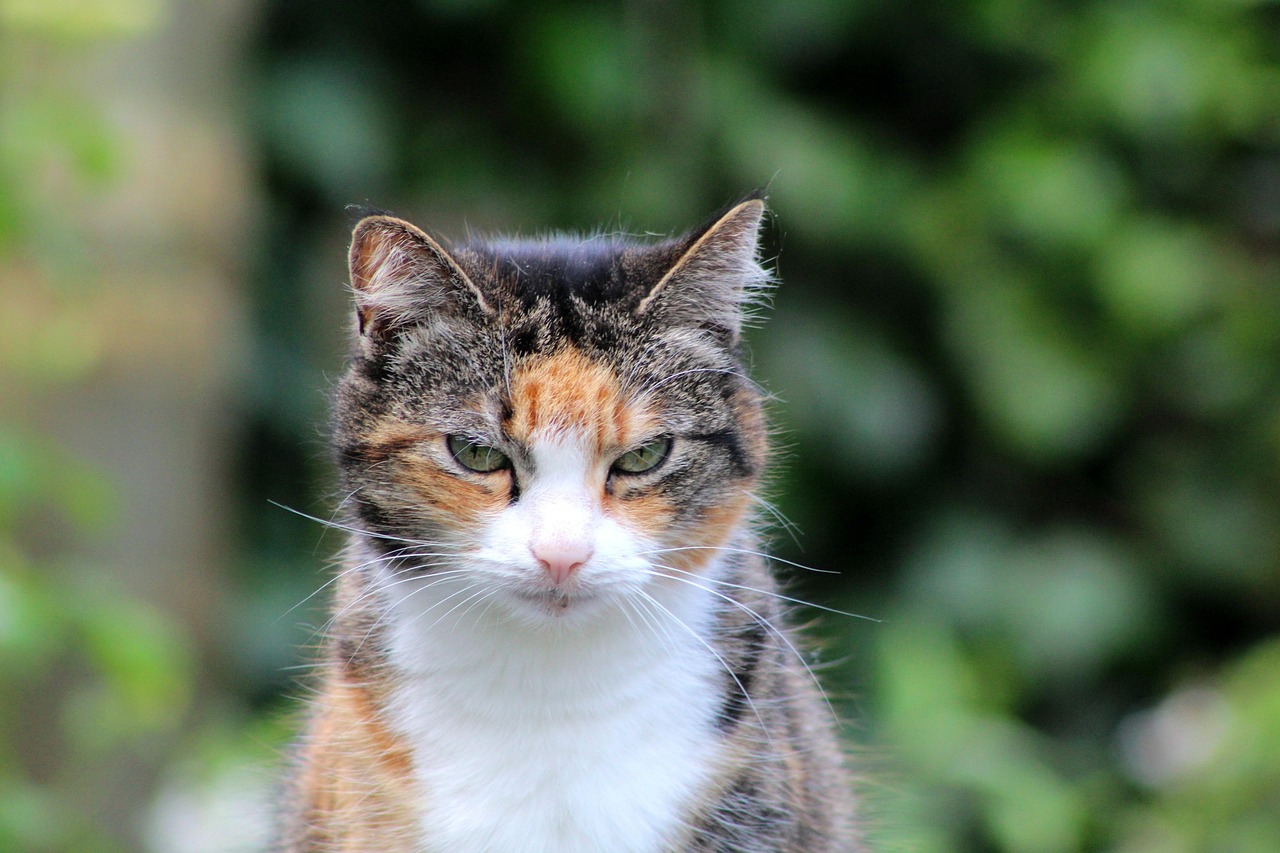
Can I still insure my 10-year-old cat?
The short, honest answer is: at Dalma and at almost all German pet insurers, no. The entry limit for the pet health insurance lies predominantly between the 7th and 9th year of life. Once your cat is 10 years old, new enrolment is legally and practically no longer possible, because the probability of illness at this age is too high and the business would no longer be viable for the insurers.
Overview: entry limits of the main providers
What this means: If your cat is now 10 years or older and does not yet have a pet health insurance, it can no longer be newly enrolled at any of these providers. Be careful with offers that promise something different: these are often restricted surgery insurances with high deductibles or benefit exclusions.
Is a 10-year-old cat actually old?
Many owners ask themselves this question, and the answer is reassuringly nuanced. Unlike in the dog, cats age very uniformly regardless of breed. A 10-year-old cat is, according to the classification of the American Animal Hospital Association and American Association of Feline Practitioners, in the senior phase, but not yet in super-senior age.
Life expectancy and life stages of the cat
What this means: Indoor cats today typically reach 14 to 20 years, outdoor cats 10 to 13 years. A 10-year-old indoor cat statistically still has 4 to 10 years of life ahead of it, a 10-year-old outdoor cat on average another 1 to 3 years. Senior does not mean old in the sense of a final phase, but that preventive care should be intensified.

Focus on the cuddles, we'll focus on the costs.
Continued cover at Dalma: what happens from the 10th year of life?
If your cat is already insured with Dalma, the contract continues with no age limit. There is no automatic change of tariff, no age-related cancellation. Once the cat turns 11, the benefit adjustment takes effect: the reimbursement rate for illness falls each year by 5 percentage points from the starting value.
Example calculation for a cat with a 100% reimbursement rate
What this means: For an illness bill of 1,000 euros in the 12th year of life of your cat, you receive 900 euros reimbursed. The adjustment is transparent, plannable and does not correspond to any hidden premium adjustment.
The tariffs in detail (for existing policyholders and owners under 10 years)
If your cat is still younger than 10 years, you can take out a Dalma pet health insurance. The following tariff variants are available and can be used individually or in combination:
What this means: For an 8 or 9-year-old cat, the entry price is higher than for a kitten, but significantly cheaper than the looming vet costs in the coming years. For pedigree cats with a higher illness risk (Maine Coon, British Shorthair, Persian), a higher annual benefit limit is worthwhile.
Typical health topics in cats from 10 years
Which conditions occur particularly frequently is less breed-specific in cats than in dogs. The following clusters are the most frequent reasons for vet visits in the senior and super-senior phase.
Chronic kidney disease (CNI)
Chronic kidney disease is the most common kidney condition in cats and one of the most common causes of death in senior cats. According to DocCheck, about 50% of all cats over 12 years are affected, and according to the German Federal Association for Animal Health a third of all cats over 15 years. Diagnostics cost 80 to 150 euros, a renal diet and infusion therapies at an advanced stage 60 to 200 euros per month.
Thyroid overactivity (hyperthyroidism)
According to Dr. Hölter, hyperthyroidism is the most common hormonal condition in cats over 8 years. Typical symptoms: weight loss despite a ravenous appetite, restlessness, increased drinking. The disease often occurs together with CNI. Diagnostics (T4 blood test) cost 60 to 120 euros, medication with thiamazole 30 to 60 euros per month. With radioiodine therapy, the one-off costs lie between 1,500 and 3,000 euros.
Tumours and cancers
The cancer risk in cats rises significantly from the 8th year of life, and even more strongly from the 10th year of life. Mammary tumours are the most common type of cancer in unneutered female cats, followed by skin tumours and lymphomas. Surgical removal with histological examination costs 600 to 2,000 euros, chemotherapy over several months 2,000 to 6,000 euros.
Osteoarthritis
Osteoarthritis is often overlooked in cats because they hide pain instinctively. Studies show that over 60% of all cats over 12 years have radiological signs of osteoarthritis, yet it is clinically recognised in fewer than 15%. Symptoms: fewer jumps, less grooming, aggression when touched. Treatment with painkillers and joint preparations costs 30 to 80 euros per month.
Diabetes mellitus and FORL
Diabetes mellitus occurs in cats most frequently between the 7th and 10th year of life; risk factors are excess weight and a purely indoor life. Insulin therapy costs 40 to 80 euros per month long-term. FORL (feline odontoclastic resorptive lesions) affects, according to AniCura, every second cat from the 5th year of life; from 10 years the probability of several affected teeth is correspondingly high. Tooth extractions cost 200 to 600 euros depending on the number of teeth.
What to do if the cat is 10 years old and was not insured?
If a new policy is no longer possible, there are four realistic ways to prepare yourself financially for the vet costs of the coming years:
- A monthly nest egg: Put 40 to 80 euros each month into a separate account that is intended exclusively for vet costs. Over 2 to 3 years you build up a reserve with this that cushions acute bills.
- Use telemedicine: Services such as FirstVet offer video vet consultations for under 30 euros per consultation. Particularly valuable with senior cats, because practice visits often cause stress and some topics can be safely clarified by telemedicine.
- Half-yearly senior checks: In cats from 10 years, early detection of CNI and hyperthyroidism is the most important lever for cost control. A diagnosis at an early stage costs 60 to 150 euros, the later acute treatment ten times as much.
- Check special senior tariffs carefully: Some providers advertise tariffs for older cats. Read the small print: these are often pure surgery insurances with high deductibles, long waiting periods or extensive benefit exclusions.
Focus on the cuddles, we'll focus on the costs.
What makes Dalma special for cats from 10 years?
For existing policyholders with senior cats, the following benefits are particularly relevant. The points distinguish Dalma from the competition in the senior and super-senior phase.
- Lifelong cover after enrolment: Dalma does not cancel your policy, not even after claims. A contractual waiver of termination applies from the 2nd insurance year.
- Transparent benefit adjustment from the 11th year of life: The reimbursement rate for illness falls by 5 percentage points per year from the starting value.
- Alternative healing methods without limit: Acupuncture, homeopathy, chiropractic, osteopathy, laser therapy and magnetic field therapy are covered without limit in the health cover. Particularly relevant for osteoarthritis and as support with CNI.
- Telemedicine via FirstVet: Unlimited access to video vets. Particularly valuable with senior cats, because practice visits are increasingly stressful and many routine questions can be clarified by telemedicine.
- Emergency boarding up to 250 euros per year: If you yourself have to go to hospital for longer than 3 nights and cannot organise care.
- Behavioural therapy up to 5 hours per year: Vet-prescribed behavioural therapy is reimbursed in the health cover. Relevant for age-related behavioural changes such as house soiling, night-time vocalisation or cognitive dysfunction.
- Prosthesis subsidy up to 500 euros: Available once in both tariffs, for example after amputations or for orthopaedic aids.
Dalma compared with other providers for senior cats
In cover for senior cats, three distinguishing features are decisive: entry limit, cancellation logic in the event of claims and the transparency of the adjustment in old age.
Our assessment: Dalma's entry window up to the 9th year of life is broader than at most competitors. Combined with the contractual waiver of termination and the transparent benefit adjustment, this gives the clearly most plannable framework for owners of senior cats.
You will find further detailed comparisons on our comparison pages: Dalma vs. Petolo, Dalma vs. HanseMerkur, Dalma vs. Agila.
Frequently asked questions: cat insurance from 10 years
Which is the best cat insurance from 10 years?
For cats from 10 years, the question of the best insurance is unfortunately moot in most cases, because a new policy is no longer possible at Dalma and almost all German providers. For existing policyholders the question is different: here it is decisive whether the insurance does not cancel in the event of a claim (Dalma: contractual waiver), how transparent the age adjustment is (Dalma: 5 pp per year from the 11th year of life, for illness only) and which special benefits such as alternative healing methods are included.
What should I look for in a cat insurance for older cats?
Look out for the following points: entry age (Dalma up to the 9th year of life), waiver of termination in the event of a claim, transparent benefit adjustment in old age, cover of typical senior topics such as CNI and hyperthyroidism, level of the annual benefit limit. Be careful with tariffs that have deductibles that rise with age; this is a hidden cost trap.
Which cat insurance is suitable for my senior Maine Coon or British Shorthair?
Maine Coons, because of their weight, need special protection for joints and the musculoskeletal system; British Shorthairs are particularly prone to FORL and other dental conditions. For both breeds a health insurance with surgery cover makes sense. Important to know: congenital and hereditary conditions such as hypertrophic cardiomyopathy (HCM) are excluded from cover at Dalma; this applies regardless of breed. Diagnostics and treatment of other acquired heart topics are, by contrast, covered. If your cat is already 10 years or older, a new policy is no longer possible.
Can older cats still be insured?
At Dalma, cats can be enrolled in the pet health insurance up to the completed 9th year of life. From the 10th year of life, a new policy is no longer possible. Once your cat is insured, the cover continues for life, with a transparent benefit adjustment from the 11th year of life. At most competitors the entry limit is lower, often at 7 or 8 years.
What does a cat insurance for a 10-year-old cat cost?
For a 10-year-old cat, a new policy is no longer possible at Dalma and most German providers. For existing policyholders, the monthly premium depends on breed, tariff, reimbursement rate and annual benefit limit. For a 9-year-old cat (the last possible new policy), the entry prices at Dalma typically lie at 25 to 45 euros per month for the health insurance and 10 to 18 euros for the surgery insurance.
How high should the insurance be for a 10-year-old cat?
For a 10-year-old cat we recommend an annual benefit limit of at least 3,000 euros per year, better unlimited. The annual vet costs lie on average between 600 and 2,000 euros; individual acute treatments can reach 2,500 to 5,000 euros. For multimorbid cats (CNI plus hyperthyroidism plus a dental condition), the costs quickly add up to 3,500 euros per year.
Is a 10-year-old cat old?
A 10-year-old cat is a senior, but not at the end of its life. According to the AAFP classification, it is just at the transition from the maturity to the senior phase. Indoor cats typically reach 14 to 20 years, outdoor cats 10 to 13 years. A 10-year-old indoor cat statistically still has 4 to 10 years of life ahead of it. Senior above all means: intensify preventive care, half-yearly checks, early diagnostics.
Which insurance is worthwhile for a 10-year-old cat?
At 10 years, a new policy is no longer possible at Dalma. If your cat is already insured, it continues to receive the full reimbursement rate up to and including the 10th year of life. From the 11th year of life the benefit adjustment begins. If there is no insurance: self-funding with a monthly nest egg and telemedicine are the realistic alternatives.
Which insurance is worthwhile for an 11-year-old cat?
At 11 years, a new policy is no longer possible at Dalma. Existing policyholders receive the benefit adjustment for the first time in this year: the reimbursement rate for illness falls by 5 percentage points (for example from 100 to 95%).
Which insurance is worthwhile for a 13-year-old cat?
At 13 years, your cat is in advanced senior age. Existing policyholders at Dalma receive a reimbursement rate of 85% of the original value for illness. Particularly valuable at this age: free telemedicine via FirstVet, because practice visits increasingly cause stress.
Which insurance is worthwhile for a 15-year-old cat?
At 15 years, your cat is a super-senior. About a third of all cats at this age have chronic kidney disease. Existing policyholders at Dalma receive a reimbursement rate of 75% of the original value for illness.
Which insurance is worthwhile for a 17-year-old cat?
At 17 years, your cat is in the late super-senior phase, an age that only a few cats reach. Existing policyholders at Dalma receive a reimbursement rate of 65% of the original value for illness. At this age, close veterinary support is more important than any thought of switching insurance.
Is there a provider that still newly insures cats from 10 years?
On the German market there is no longer any reputable provider that takes out a new pet health insurance for cats from 10 years. Offers that promise something different are often restricted surgery insurances with high deductibles, long waiting periods or extensive benefit exclusions. Read the small print carefully.
Does the cover at Dalma really continue in old age?
Yes. Once your cat is insured with Dalma, the contract continues with no age limit. We do not cancel your policy, not even after claims. The only adjustment is the benefit adjustment from the 11th year of life (5 pp per year for illness).
What can I do if my insurance has cancelled my senior cat?
At Dalma this does not happen: a contractual waiver of termination applies from the 2nd insurance year. If another provider has cancelled in the event of a claim, a switch to Dalma is possible before the 9th year of life, provided there are no serious pre-existing conditions. After the 9th year of life, only self-funding remains.
Sources and further information
Dalma product documents
- Dalma quote calculator and policy sign-up
- Dalma NI document on the insurance conditions
- Dalma Table of Guarantees on the benefits
Veterinary sources
- German Federal Association for Animal Health: age-related diseases in cats
- DocCheck: chronic kidney disease in cats
- Dr. Hölter: thyroid overactivity in cats
- American Animal Hospital Association and AAFP: Feline Life Stage Guidelines
Further Dalma content
Sources and further information
Dalma product documents
- Dalma quote calculator and policy sign-up
- Dalma NI document on the insurance conditions
- Dalma Table of Guarantees on the benefits
Veterinary sources
- German Federal Association for Animal Health: age-related diseases in cats
- DocCheck: chronic kidney disease in cats
- Dr. Hölter: thyroid overactivity in cats
- American Animal Hospital Association and AAFP: Feline Life Stage Guidelines


