
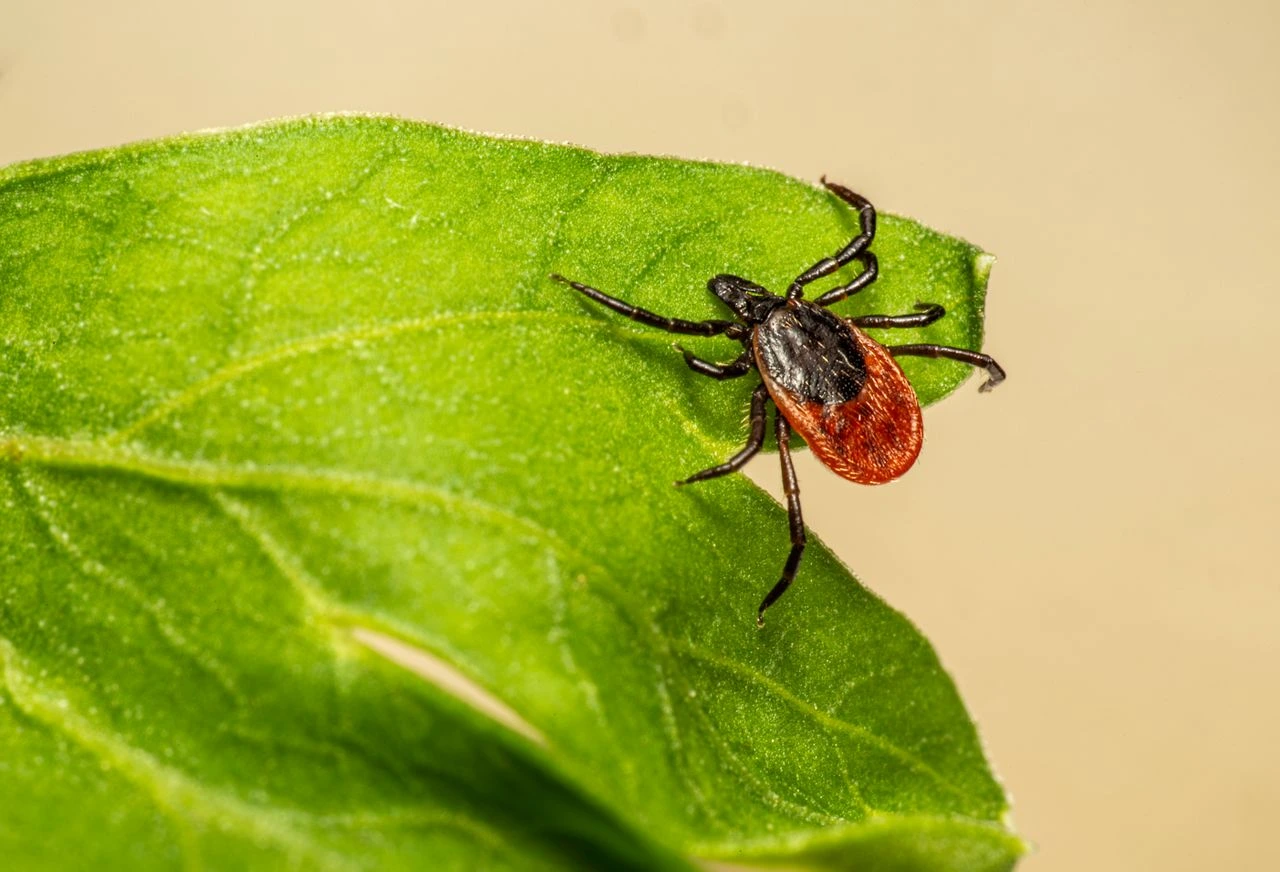
When ticks in dogs are active and when the risk is greatest
This article is part of our seasonal calendar of dog health, which shows you the dangers your dog faces over the year.
Ticks do not need high summer heat. They become active from around seven to ten degrees, so often as early as March. They sit in tall grass, bushes, leaves and along path edges and wait there until a dog comes past.
This is clearly reflected in our data. Of around 23,700 evaluated treatment incidents of 50 euros and above, 236 were tick-related bites and illnesses. As our seasonal calendar of dog health shows, these cases cluster in spring around 1.4 times as strongly as the yearly average, stay at a high level over the summer and only decline in autumn and winter. But they never disappear entirely, because in mild winters individual ticks stay active.
For you this means: tick protection starts early in the year and ends late. Protection only in the classic summer months leaves out exactly the strong spring phase.
A dog covered in ticks, how to recognise an infestation
You often feel an attached tick as a small lump in the fur before you see it. Check your dog after every walk, especially at the thin-skinned spots: head, ears, neck, armpits, belly, the inner thighs and between the toes.
A freshly attached tick is small and flat; once engorged it becomes round and greyish. The skin at the bite site can be slightly reddened. If you find several ticks at once, that is no reason to panic, but a clear signal to check the tick protection and keep an eye on the spots over the next few days.

Focus on the cuddles, we'll focus on the costs.
Removing ticks from your dog correctly, step by step
The faster a tick is removed, the lower the risk of transmission. Proceed calmly and thoroughly:
- Calm your dog and provide good light. For restless dogs a second person helps.
- Grip the tick with tick tweezers, a tick card or fine-pointed tweezers as close to the skin as possible, not on the engorged body.
- Pull it out slowly and straight, without squeezing it. Some tools are turned slightly while doing so.
- Check that the tick is completely out and disinfect the spot.
- Watch the bite site for one to two weeks. In case of redness, swelling, fever or lameness, go to the vet.
What you should not do: Do not drip oil, glue or nail polish remover onto the tick. It irritates the tick, it releases more saliva, and that is exactly what raises the risk of disease transmission. Do not squeeze the tick's body; this presses pathogens into the wound.
These diseases are transmitted by ticks
Not every tick is infected, and not every bite makes a dog ill. But you should know the pathogens that matter most in Germany and when travelling. In our data, tick-related illnesses fall mainly into these pictures:
Babesiosis is also called canine malaria because of the destroyed red blood cells and can become life-threatening without treatment. Ehrlichiosis matters above all for travel to the Mediterranean region; you can find more on this in the guide Travelling with a dog. TBE is rare in dogs and usually mild, but in individual cases it can affect the nervous system.
Recognising the symptoms of tick-borne diseases
The tricky part is that the illnesses often only show days to weeks after the bite, sometimes even slowly over months. Watch for these warning signs:
- fever, fatigue and loss of appetite
- lameness that shifts legs, or stiff movements
- pale or yellowish mucous membranes
- dark-coloured urine
- nosebleeds or small skin bleedings
These signs are non-specific and can have many causes. But if your dog becomes listless, limps or shows a fever in the weeks after a tick bite, it belongs at the practice quickly. The earlier a tick-borne disease is recognised, the better the outlook.
Tick protection compared: tablets, spot-on and collar
There is no single best tick protection, but there is a suitable solution for every dog. The three common routes at a glance:
- Tablets against ticks work from the inside, are waterproof and, depending on the product, active for about one to three months. Practical for dogs that bathe or swim a lot.
- Spot-on is dripped onto the skin at the neck and spreads across the skin layers, usually with protection over around four weeks.
- A tick collar releases its active ingredient over a longer period and suits dogs that need a continuous solution.
Which product is best for your dog depends on age, weight, pre-existing conditions, lifestyle and travel destinations. Get advice on this at your vet practice, especially for puppies, pregnant bitches or travel to the Mediterranean region.
Focus on the cuddles, we'll focus on the costs.
Preventing ticks in everyday life
Besides the protective product, a simple routine helps. Check your dog thoroughly after every walk, especially in the high season from spring to autumn. Avoid tall grass and dense undergrowth where possible, and keep the lawn in your own garden short.
Check yourself too, because ticks can move from the dog to people. And remember the second wave in the mild autumn, when many people stop protection too early.
What tick treatments cost and how Dalma protects you
A single tick bite is usually harmless, a tick-borne disease is not. Diagnostics, blood tests, medication and, in severe cases, inpatient treatment quickly add up. That shows in our data too: for tick-related incidents the reimbursement is a median of around 153 euros and thus higher than the general average, with single cases reaching around 3,900 euros.
With Dalma's pet health insurance the treatment is reimbursed within your tariff up to 4 times the GOT rate. You choose a reimbursement of 80 or 100 percent and an annual benefit limit from 1,500 euros to unlimited. That way, in an emergency you can decide what is best for your dog without a glance at the invoice.
Frequently asked questions about ticks in dogs
How do I remove a tick from my dog correctly?
Grip the tick with tick tweezers, a tick card or fine-pointed tweezers close to the skin and pull it out slowly and straight, without squeezing the body. Skip oil and glue, disinfect the spot and watch it for one to two weeks.
Which diseases do ticks transmit to dogs?
The most important are babesiosis, anaplasmosis, Lyme disease and ehrlichiosis, plus TBE in rare cases. They can trigger fever, lameness, weakness and pale mucous membranes and should be treated early.
Which anti-tick product is best for my dog?
That depends on the dog and everyday life. Tablets work from the inside and are waterproof, spot-on protects via the skin, a collar over a longer period. Which product fits is best clarified with your vet, especially for puppies, pregnant bitches or travel.
From when are ticks in dogs active?
From around seven degrees, so often as early as March. In our data, tick-related cases cluster in spring and stay high over the summer. In mild weather a residual risk remains even in winter.
Does Dalma cover the costs of tick-borne diseases?
Yes, within the chosen tariff and up to 4 times the GOT rate. You choose reimbursement and annual benefit limit to suit your dog.
Sources
- Dalma consumer information
- Dalma table of benefits
- ESCCAP Germany, diseases transmittable by ticks in dogs (German)
- ESCCAP Germany, what to do about a tick bite in dogs (German)
- Internal Dalma DE claims database, dog, cases of 50 euros and above, evaluated at incident level (236 tick-related incidents, aggregated analysis, reproducibly documented, disease figures consistent with the travel cluster)
Sources
- Dalma consumer information
- Dalma table of benefits
- ESCCAP Germany, diseases transmittable by ticks in dogs (German)
- ESCCAP Germany, what to do about a tick bite in dogs (German)
- Internal Dalma DE claims database, dog, cases of 50 euros and above, evaluated at incident level (236 tick-related incidents, aggregated analysis, reproducibly documented, disease figures consistent with the travel cluster)


