
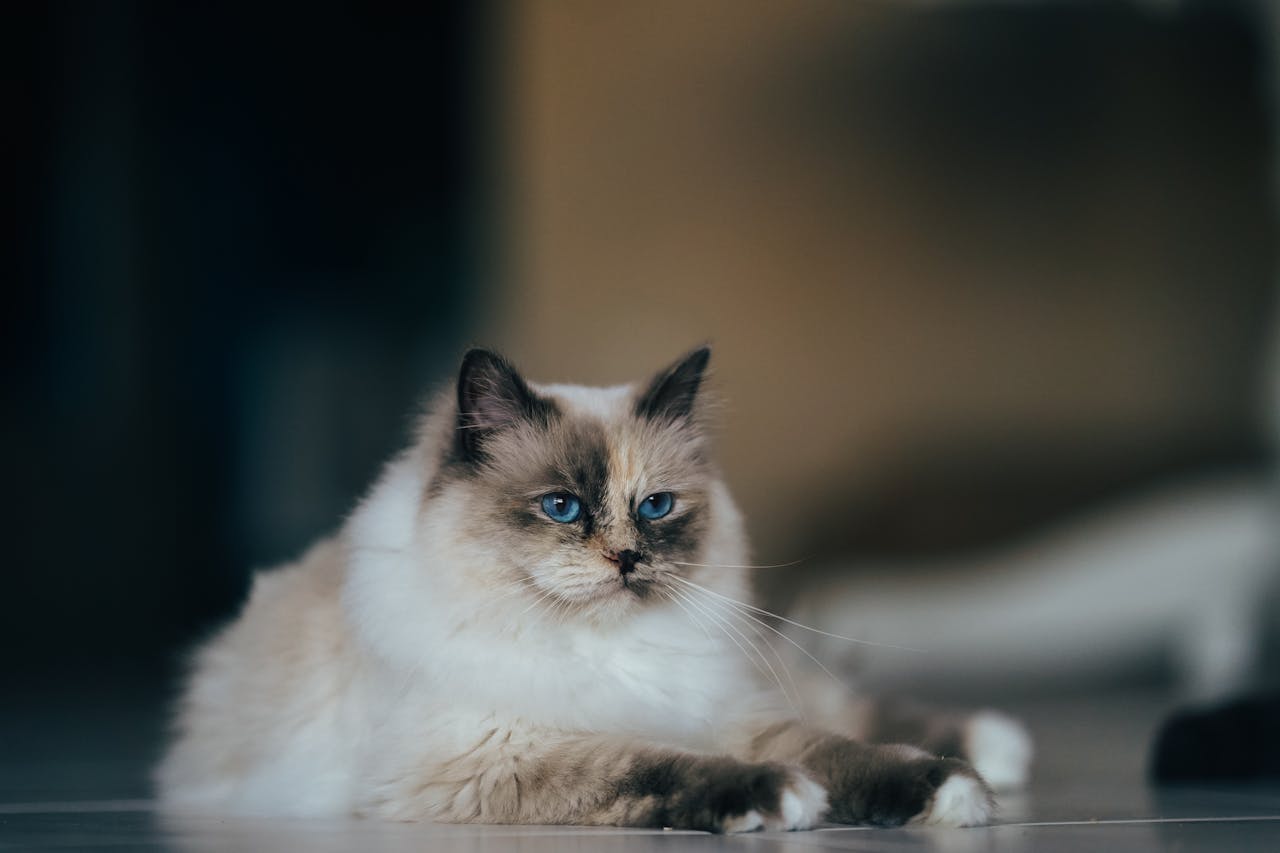
Rag Doll at the Vet: Why Diagnostics and Internal Medicine Dominate for Ragdolls
Ragdolls are biologically and behaviourally distinctive cats. They reach up to 10 kilograms but are simultaneously remarkably calm, trusting and passive. This combination shapes their health profile fundamentally differently from active breeds.
Internal Medicine & Lab: 50.4% of all cases
More than half of all Ragdoll vet visits relate to "Other" diagnostics – blood tests, urine analyses, X-rays, ultrasound, general examinations. Maximum payout: €3,714. Two reasons: First, Ragdolls are often monitored preventively due to their susceptibility to HCM and PKD. Second, as a calm breed, they only show health problems late, requiring more comprehensive diagnostics. In seniors, this share rises to 75% – chronic conditions are closely monitored.
Gastrointestinal: The financial peak
At avg. €427 per case and a maximum payout of €5,860, gastrointestinal diseases are the financially most significant category in Ragdolls. In kittens, they already cost avg. €561 per case – often infections or intolerances during growth. Complex procedures like foreign body surgery or chronic intestinal diseases can dramatically increase these amounts.
Dental: Growing importance in adulthood
Dental treatments are the third most frequent category (11.9%). In kittens avg. €454, in adults avg. €583. Frequently inflammations of the periodontium. Ragdolls benefit greatly from early dental prevention – Dalma's preventive care budget covers dental cleanings without waiting period.
Other common conditions
- Hypertrophic Cardiomyopathy (HCM): in Ragdolls genetically caused by the R820W mutation. Diagnosis via cardiac ultrasound approx. €150–400. Note: HCM is excluded as a genetic feline condition.
- Polycystic Kidney Disease (PKD): inherited kidney cysts. Diagnostics via ultrasound approx. €100–300. Note: Excluded as inherited condition.
- Respiratory diseases: avg. €410/case, max €3,690. Bronchitis, asthma. Covered after 30 days.
- Obesity and secondary conditions: Ragdolls are calm, food-loving cats with a high tendency to obesity. Diabetes treatment approx. €300–800/year.
- FORL and gingivitis: cleaning approx. €150–350, extractions approx. €500–1,200. Covered after 12 months.
- Eye diseases (retinal detachment): Ragdolls can be prone to retinal detachment. Diagnostics approx. €100–300. Acquired forms covered.
- FIP (Feline Infectious Peritonitis): particularly observed in young animals with weak immune systems. Covered after 30 days.
The cost ranges listed above are based on the German Veterinary Fee Schedule (GOT 2022) and typical market prices in German veterinary practices. Actual costs may vary depending on the practice, the scope of treatment and the chosen GOT rate (1x to 4x). Sources are listed at the end of this page.
What Dalma Actually Reimburses for Ragdolls: Data from 226 Claims
226 Ragdoll claims at Dalma (January 2024 – December 2025). Source: Dalma claims database, March 2026.
Our claims data shows how costs develop over life stages:
Kittens (0–1 year): Other examinations dominate at 55%. Gastrointestinal treatments cost avg. €561 – often due to infections or intolerances.
Adults (2–7 years): Dental treatments come into focus. At avg. €583 per case, they are the most expensive category. Frequently inflammations of the periodontium.
Seniors (8+ years): Other (internal medicine) reach 75% of cases. Increased monitoring of chronic conditions – at avg. €219 per incident comparatively moderate.

Focus on the cuddles, we'll focus on the costs.
Surgery Insurance or Full Cover: Which Plan Suits the Ragdoll?
1. Surgery insurance for Ragdoll
Covers costs for surgical procedures – e.g. dental surgery, gastrointestinal surgery or tumours. Dalma includes:
- Surgical procedures for illness or accident
- Pre-op diagnostics up to 30 days before surgery
- Post-op clinic stays up to 30 days after surgery
- Medication, bandages and aftercare
- Physiotherapy and alternative treatments up to 30 days post-op
- Dental surgery after waiting period
- Emergency accommodation up to €250 per year
2. Cat health insurance (full cover) for Ragdoll
Covers diagnostics, treatments, medication and preventive care. 80–100% reimbursement, annual limit from €1500 to unlimited. Includes:
- Diagnostics and medical examinations
- Prescribed medication and treatments
- Unlimited physiotherapy
- Alternative treatments such as homeopathy or acupuncture
- Behavioural therapy up to 5 hours per year
- Telemedicine via FirstVet
- Preventive care budget for vaccinations, dental care, deworming (from €1,500 annual limit)
Assessment: For no cat breed is full cover so clearly advantageous as for the Ragdoll. Over 50% of all vet visits are diagnostics and internal medicine – treatments only covered by health insurance with full cover. A pure surgery insurance does not apply to the majority of typical Ragdoll costs.
What Does Ragdoll Insurance Cost at Dalma?
- Cat health insurance: from approx. €16 per month
- Surgery insurance: from approx. €8 per month
As of April 2026. Dalma offers 15% discount when insuring multiple pets. Neutering/spaying claimed via the preventive care budget.
From age 10, the reimbursement rate for illnesses decreases by 5% annually. Accident reimbursement remains unchanged.
Waiting Periods for Ragdoll
- 2 days for accidents
- 14 days for surgeries
- 30 days for medical treatments
- 12 months for FORL, gingivitis and periodontitis
- 12 months for HD/ED
- 18 months for patellar luxation
Pre-existing conditions are excluded. Preventive care budget is available from day 1.
What Is Not Covered for Ragdolls
Ragdolls have several inherited conditions due to their breeding history, excluded as congenital or genetic diseases:
- HCM (Hypertrophic Cardiomyopathy) – in Ragdolls often caused by the breed-specific R820W mutation
- PKD (Polycystic Kidney Disease) – inherited kidney cysts
- PRA (Progressive Retinal Atrophy) – inherited retinal disease
- Congenital eye diseases
- Persistent deciduous teeth
- Epilepsy
- Osteoarthritis
- Diseases preventable by vaccination (cat flu, feline distemper, leukaemia, rabies)
Acquired heart, kidney, eye and joint problems are covered after the waiting period. Acquired retinal detachments not due to congenital PRA may be covered.
Focus on the cuddles, we'll focus on the costs.
Claims Process at Dalma
100% digital. Upload invoice via app, 8-day deadline. Reimbursement target 48 hours (contractually up to 5 working days). Up to 4x GOT rate including emergency surcharges. Free choice of vet worldwide. Telemedicine via FirstVet free and unlimited. Neutering and spaying can be claimed via preventive care budget.
Ragdoll Insurance: Who Benefits Most
Full cover almost always recommended: With 50.4% Other (diagnostics) and 11.9% dental treatments, over 60% of all Ragdoll vet visits relate to services only covered by cat health insurance with full cover.
Higher annual limit recommended: With a maximum gastrointestinal payout of €5,860 in our data, an unlimited or high annual benefit is advisable.
Insure early: Conditions arising after contract start are considered acquired. Insuring at kitten age means the frequent gastrointestinal problems and later dental treatments are considered acquired.
Less value: If your Ragdoll already has HCM, PKD or dental diagnoses before contract start. The most important genetic conditions are excluded.
A calculation: An adult Ragdoll with two routine examinations with lab work (avg. €173 each), one dental treatment (avg. €583) and one gastrointestinal treatment (avg. €427) quickly reaches €1,300–€1,500 in covered costs.
Frequently Asked Questions About Ragdoll Insurance
Is cat health insurance worthwhile for Ragdolls?
Yes, particularly so. Our 226 claims show that over 50% of all vet visits in Ragdolls relate to internal medicine and diagnostics – services only covered by health insurance with full cover.
Is HCM covered for Ragdolls?
No. Hypertrophic Cardiomyopathy (HCM) is classified as a genetic feline condition and is excluded at Dalma – as with all insurers. In Ragdolls, a specific mutation (R820W) exists that can be detected by genetic testing. Acquired heart conditions that are not HCM may be covered.
Is PKD covered for Ragdolls?
No. PKD (Polycystic Kidney Disease) is a congenital/inherited condition and therefore excluded. Acquired kidney problems that are not PKD are covered after waiting period.
Are diagnostics and lab work covered for Ragdolls?
Yes, with cat health insurance / full cover. Diagnostic examinations such as blood tests, ultrasound or X-rays are part of the full cover, provided they are related to a covered condition.
Are dental treatments covered for Ragdolls?
Yes. FORL, gingivitis and periodontitis are covered after a 12-month waiting period. Dental surgery also falls under the surgery plan. Routine dental cleaning can be claimed via the preventive care budget.
Are gastrointestinal diseases covered for Ragdolls?
Yes. Conditions such as gastritis, diarrhoea, pancreatitis and foreign body surgery are covered after contract start. The maximum payout in our data was €5,860.
Are eye problems such as retinal detachment covered?
Acquired eye diseases such as retinal detachment are covered. Congenital forms (e.g. PRA) are excluded.
Is there a deductible at Dalma for cats?
No. Dalma has no deductible. Depending on the plan, 80–100% of eligible costs are reimbursed.
Can I insure my Ragdoll as an adult?
Yes. Insurance can be taken out at Dalma up to an age of under 9 years. Pre-existing conditions are excluded.
Does my Ragdoll stay insured after an expensive treatment?
Yes. Dalma waives the right to cancel after a claim.
Sources and Further Information
The veterinary costs mentioned in this article are reference values. Actual costs are governed by the German Veterinary Fee Schedule (GOT) and may vary depending on the practice, the scope of treatment and the chosen GOT rate (1x to 4x).
Official sources on the German Veterinary Fee Schedule (GOT 2022):
- Full text of the GOT 2022: gesetze-im-internet.de/got_2022
- German Veterinary Association (BTK): bundestieraerztekammer.de – official body with information on GOT, emergency service and billing
- German Federal Ministry of Agriculture (BMLEH): bmleh.de/DE/themen/tiere/got.html – background on the 2022 GOT amendment
Claims data:
The claims data used in this article is based on 226 Ragdoll illness cases from the Dalma claims database between January 2024 and December 2025.
Dalma contractual basis:
The exact services, waiting periods and exclusions are detailed in the Dalma terms of insurance and information document. These are accessible in the customer account and at dalma.co/de.
Sources and Further Information
The veterinary costs mentioned in this article are reference values. Actual costs are governed by the German Veterinary Fee Schedule (GOT) and may vary depending on the practice, the scope of treatment and the chosen GOT rate (1x to 4x).
Official sources on the German Veterinary Fee Schedule (GOT 2022):
- Full text of the GOT 2022: gesetze-im-internet.de/got_2022
- German Veterinary Association (BTK): bundestieraerztekammer.de – official body with information on GOT, emergency service and billing
- German Federal Ministry of Agriculture (BMLEH): bmleh.de/DE/themen/tiere/got.html – background on the 2022 GOT amendment
Claims data:
The claims data used in this article is based on 226 Ragdoll illness cases from the Dalma claims database between January 2024 and December 2025.
Dalma contractual basis:
The exact services, waiting periods and exclusions are detailed in the Dalma terms of insurance and information document. These are accessible in the customer account and at dalma.co/de.


